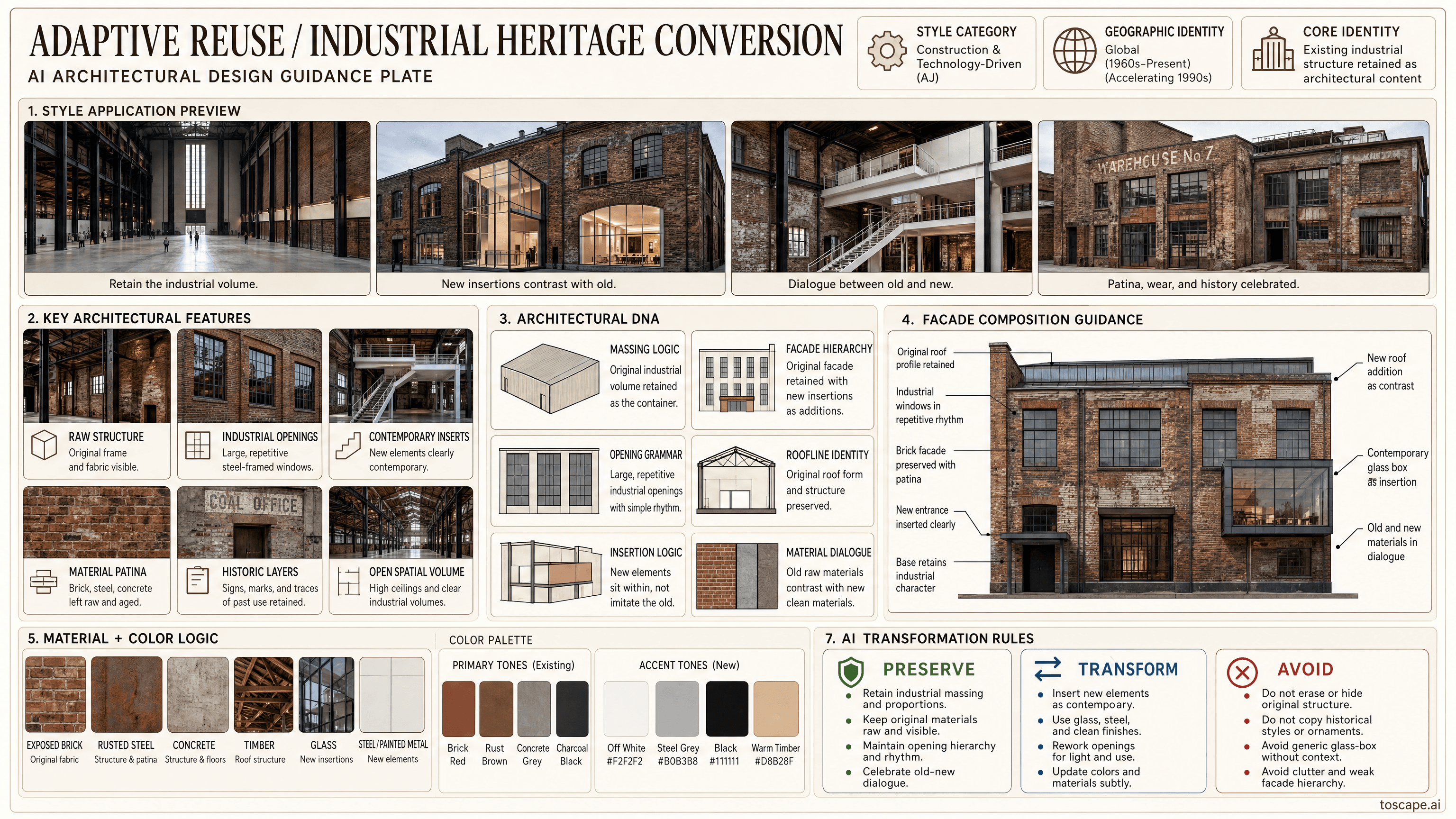
ADAPTIVE REUSE / INDUSTRIAL HERITAGE CONVERSION
Global (1960s-present, accelerating 1990s); Core identity: Existing industrial/warehouse/... / Transformation and reuse
Existing industrial/warehouse/religious/infrastructure structure retained as primary architectural content - new insertions contrast with...
Overview
ADAPTIVE REUSE / INDUSTRIAL HERITAGE CONVERSION is a global architectural style rooted in Global (1960s-present, accelerating 1990s); Core identity: Existing industrial/warehouse/religious/infrastructure structure retained as primary architectural content - new insertions contrast with old fabric - raw original materials (brick, steel, concrete, timber) left exposed - new interventions clearly legible as contemporary - dialogue between old and new - patina, wear, and history celebrated - sustainability through retention. Existing...
Visual DNA
Massing & Form
Existing industrial/warehouse/religious/infrastructure structure retained as primary architectural content - new insertions contrast with old fabric - raw original materials (brick, steel, concrete, timber) left exposed - new...
Facade Language
Existing industrial/warehouse/religious/infrastructure structure retained as primary architectural content - new insertions contrast with old fabric - raw original materials (brick, steel, concrete, timber) left exposed - new...
Materials & Texture
Existing industrial/warehouse/religious/infrastructure structure retained as primary architectural content. new insertions contrast with old fabric.
Color Palette
Existing industrial/warehouse/religious/infrastructure structure retained as primary architectural content - new insertions contrast with old fabric - raw original materials (brick, steel, concrete, timber) left exposed - new...
Ornament & Detail
Existing building clearly legible as industrial/heritage structure. Original materials left raw with patina.
Climate Response
Global (1960s-present, accelerating 1990s); Core identity: Existing industrial/warehouse/religious/infrastructure structure retained as primary architectural content. new insertions contrast with old fabric.
Landscape & Ground
Global (1960s-present, accelerating 1990s); Core identity: Existing industrial/warehouse/religious/infrastructure structure retained as primary architectural content. new insertions contrast with old fabric.
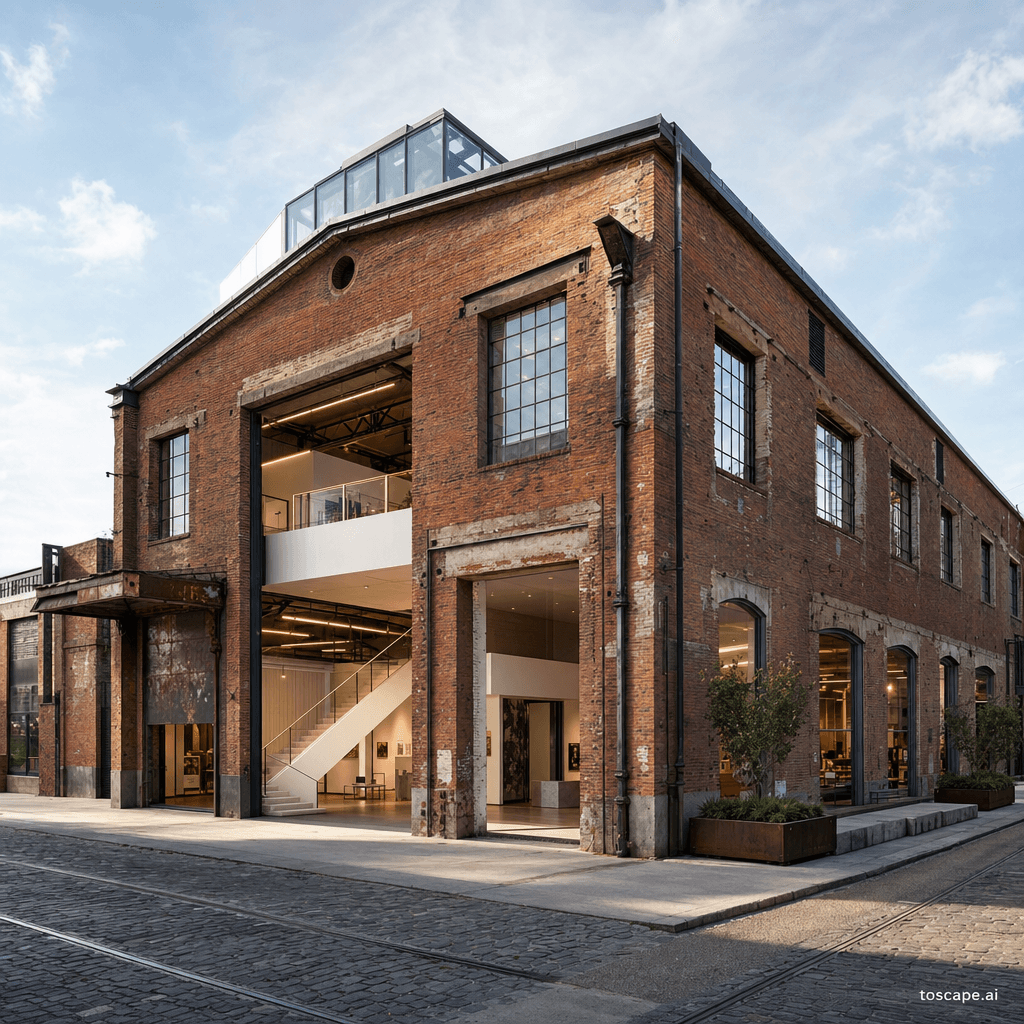
Reference elevation
ADAPTIVE REUSE / INDUSTRIAL HERITAGE CONVERSION - characteristic facade composition within the transformation and reuse.
Context Snapshot
Global (1960s-present, accelerating 1990s); Core identity: Existing industrial/warehouse/religious/infrastructure structure retained as primary architectural content - new insertions contrast with old fabric - raw original materials (brick, steel, concrete, timber) left exposed - new interventions clearly legible as contemporary - dialogue between old and new - patina, wear, and history celebrated - sustainability through retention
Contemporary Relevance
Today, ADAPTIVE REUSE / INDUSTRIAL HERITAGE CONVERSION remains relevant wherever projects need transformation and reuse cues without losing performance or contemporary usability. In Toscape it responds best when prompts emphasize existing industrial/warehouse/religious/infrastructure structure retained as primary architectural content - new insertions contrast with old fabric - raw original materials (brick, steel, concrete, timber) left exposed - new...
Use this style in Toscape
Explore ADAPTIVE REUSE / INDUSTRIAL HERITAGE CONVERSION directly inside Toscape using Facade Re-Style and design workflow prompts tuned for global architectural references.
Open ADAPTIVE REUSE / INDUSTRIAL HERITAGE CONVERSION in the gallery