Critical Regionalism
Place-specific - each project responds uniquely to its local topography, climate,... / Regional contemporary
Place-specific materials, tectonic clarity, topography-driven form, and strong climate response.
Overview
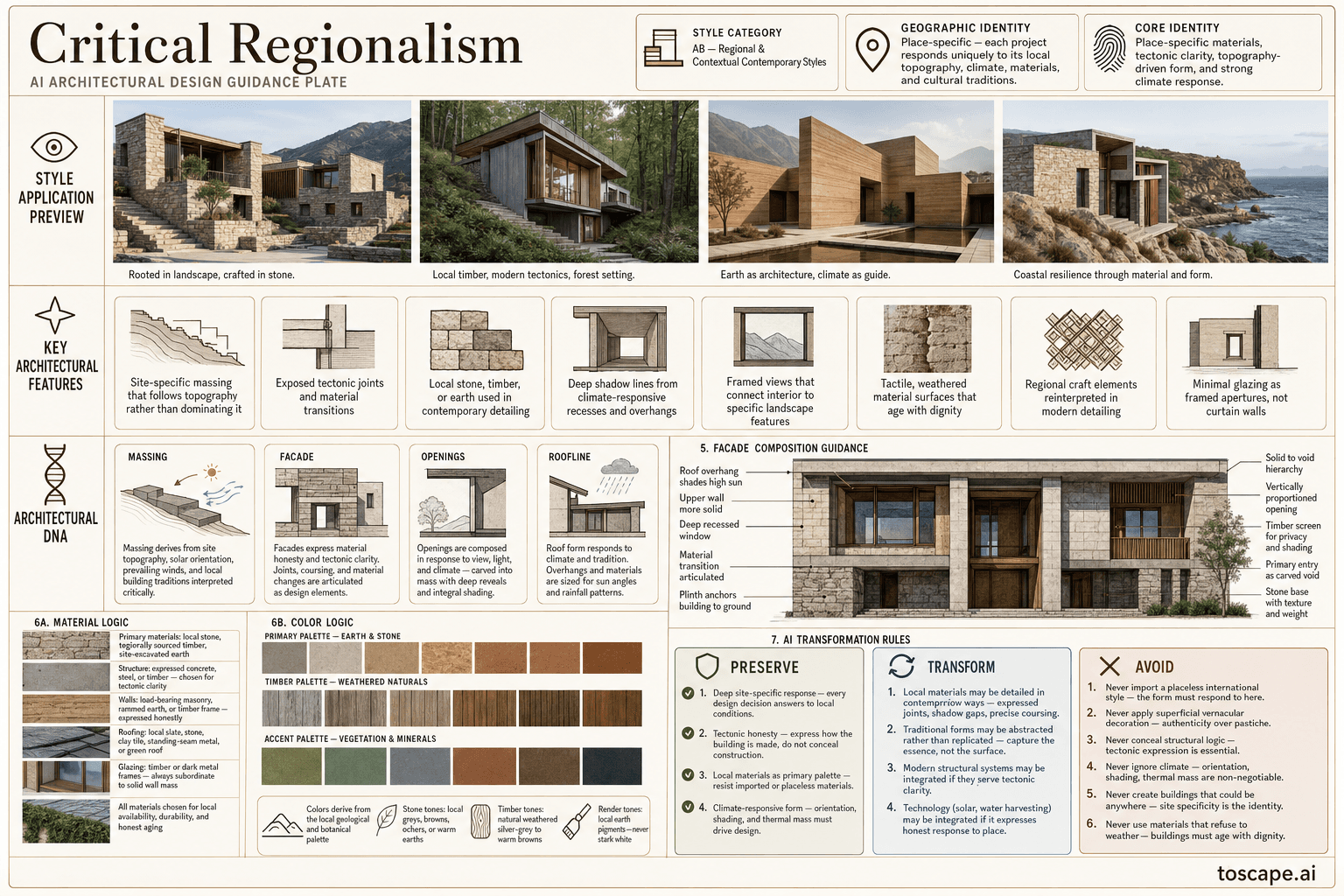
Critical Regionalism is a global architectural style rooted in Place-specific - each project responds uniquely to its local topography, climate, materials, and cultural traditions. Theorized by Kenneth Frampton, the approach is universal in principle but intensely local in application. Place-specific materials, tectonic clarity, topography-driven form, and strong climate response. Grounded, tectonic, and contextually resonant.
Visual DNA
Massing & Form
Massing derives from site topography, solar orientation, prevailing winds, and local building traditions interpreted critically. Volumes may terrace down slopes, nestle into hillsides, or cluster around courtyards.
Facade Language
Facades express material honesty and tectonic clarity. Joints, coursing, and material changes are articulated as design elements.
Materials & Texture
Primary materials: local stone, regionally sourced timber, site-excavated earth Structure: expressed concrete, steel, or timber. chosen for tectonic clarity Walls: load-bearing masonry, rammed earth, or timber frame.
Color Palette
Colors derive from the local geological and botanical palette Stone tones: local greys, browns, ochres, or warm earths Timber tones: natural weathered silver-grey to warm browns Render tones: local earth pigments.
Ornament & Detail
Deep site-specific response. every design decision answers to local conditions.
Climate Response
Place-specific. each project responds uniquely to its local topography, climate, materials, and cultural traditions.
Landscape & Ground
Place-specific. each project responds uniquely to its local topography, climate, materials, and cultural traditions.
Reference elevation
Critical Regionalism - characteristic facade composition within the regional contemporary.
Context Snapshot
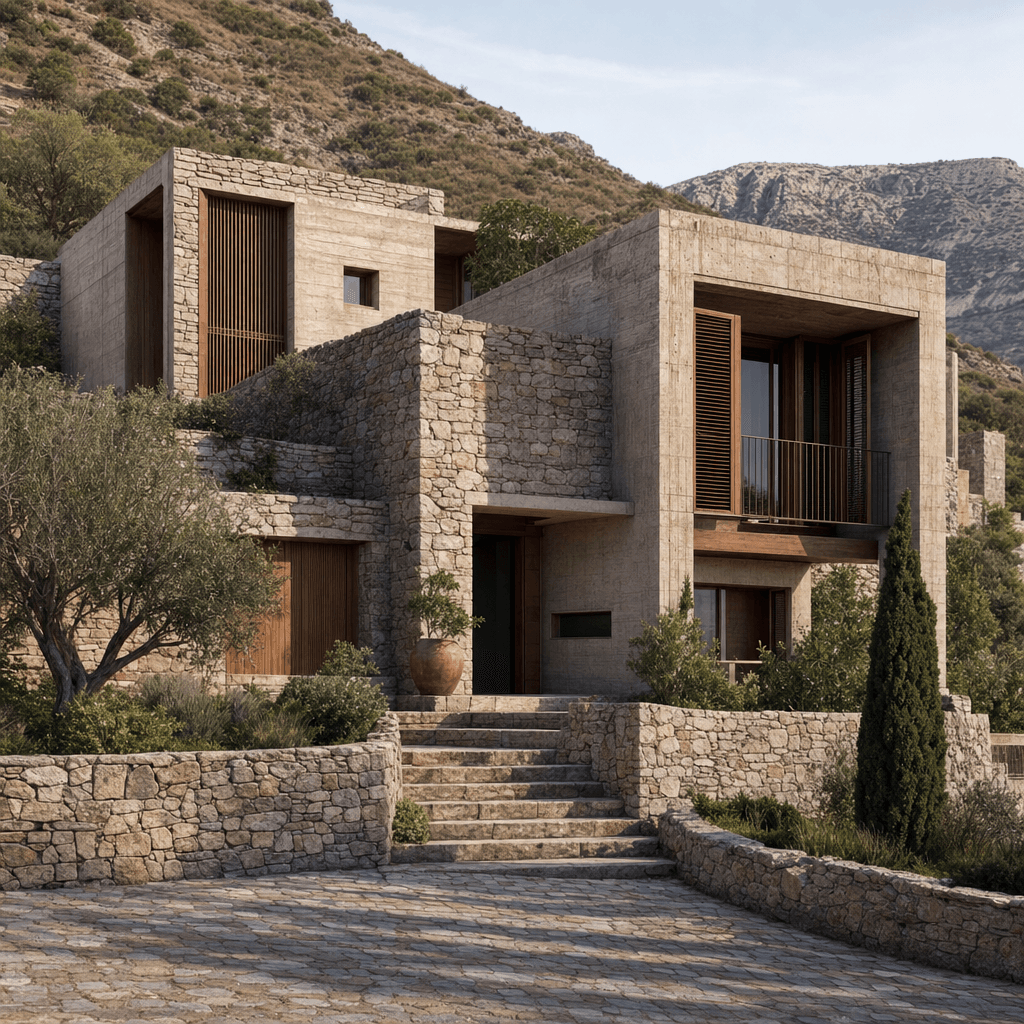
Grounded, tectonic, and contextually resonant. Massing derives from site topography, solar orientation, prevailing winds, and local building traditions interpreted critically. Place-specific - each project responds uniquely to its local topography, climate, materials, and cultural traditions.
Contemporary Relevance
Today, Critical Regionalism remains relevant wherever projects need regional contemporary cues without losing performance or contemporary usability. In Toscape it responds best when prompts emphasize massing derives from site topography, solar orientation, prevailing winds, and local building traditions interpreted critically. primary materials: local stone, regionally sourced timber, site-excavated earth structure: expressed concrete, steel, or timber -...
Use this style in Toscape
Explore Critical Regionalism directly inside Toscape using Facade Re-Style and design workflow prompts tuned for global architectural references.
Open Critical Regionalism in the gallery