High Tech
Originated in Britain in the 1970s with architects Norman Foster, Richard Rogers,... / Digital and technology
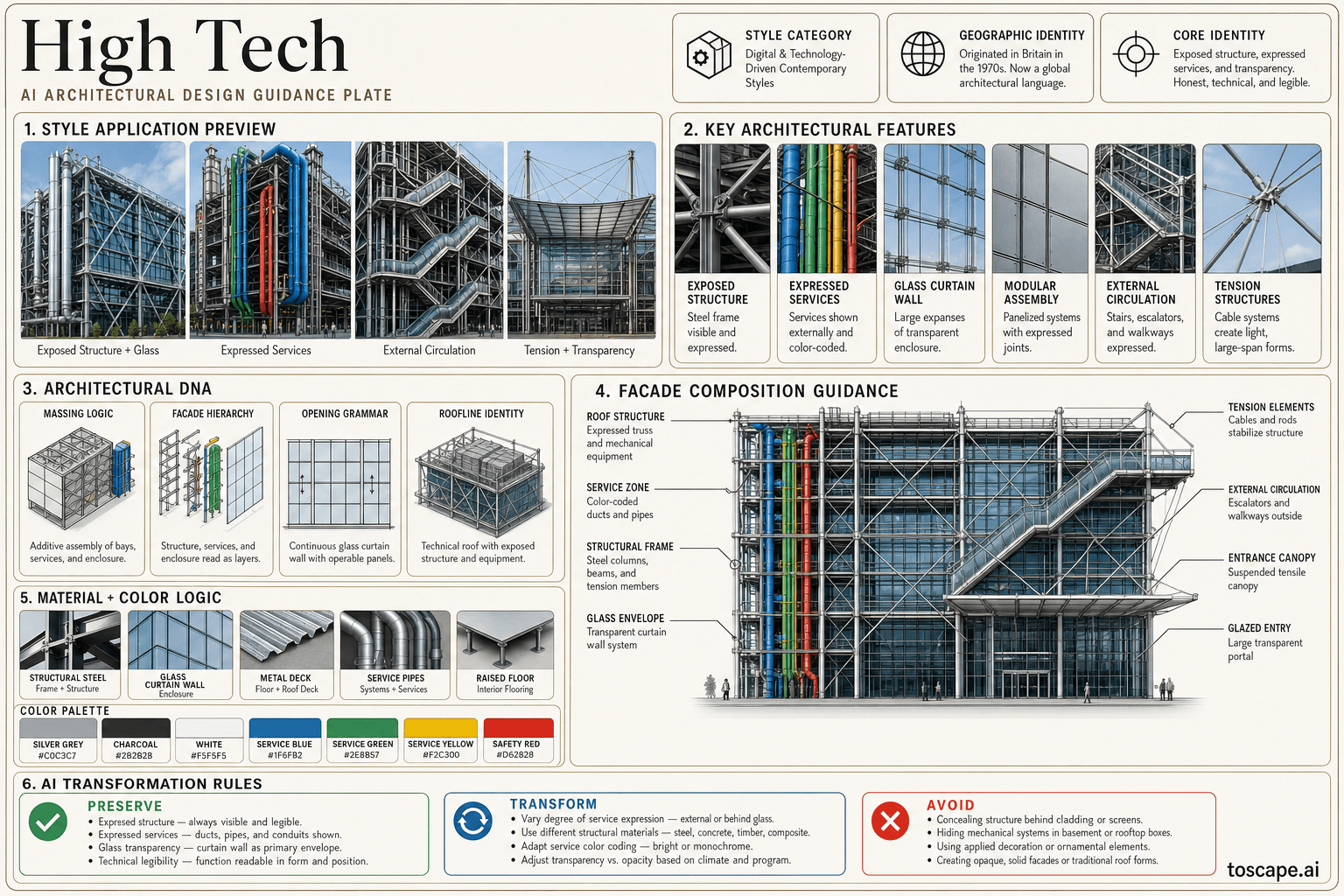
Exposed structure, curtain wall systems, visible service bands, modular joints, and legible technical assemblies.
Overview
High Tech is a global architectural style rooted in Originated in Britain in the 1970s with architects Norman Foster, Richard Rogers, Nicholas Grimshaw, and Michael Hopkins. The movement drew inspiration from industrial structures, engineering, and the space program. Now a global architectural language with major works across Europe, Asia, and the Americas. High Tech represents architecture that celebrates industrial production, structural engineering, and building services as the primary aesthetic. Exposed structure, curtain wall...
Visual DNA
Massing & Form
Massing is additive and component-based. the building reads as an assembly of structural bays, service zones, and enclosure modules rather than a monolithic sculptural form.
Facade Language
The facade is a layered assembly of structure, services, and enclosure. each system reads as a distinct layer.
Materials & Texture
Structure: exposed structural steel. painted, galvanized, or stainless.
Color Palette
Primary tones: silver, grey, white. the industrial default The structural frame provides a dominant dark grid.
Ornament & Detail
Exposed structure. columns, beams, trusses, and tension members must be visible.
Climate Response
Originated in Britain in the 1970s with architects Norman Foster, Richard Rogers, Nicholas Grimshaw, and Michael Hopkins. The movement drew inspiration from industrial structures, engineering, and the space program.
Landscape & Ground
Originated in Britain in the 1970s with architects Norman Foster, Richard Rogers, Nicholas Grimshaw, and Michael Hopkins. The movement drew inspiration from industrial structures, engineering, and the space program.
Reference elevation
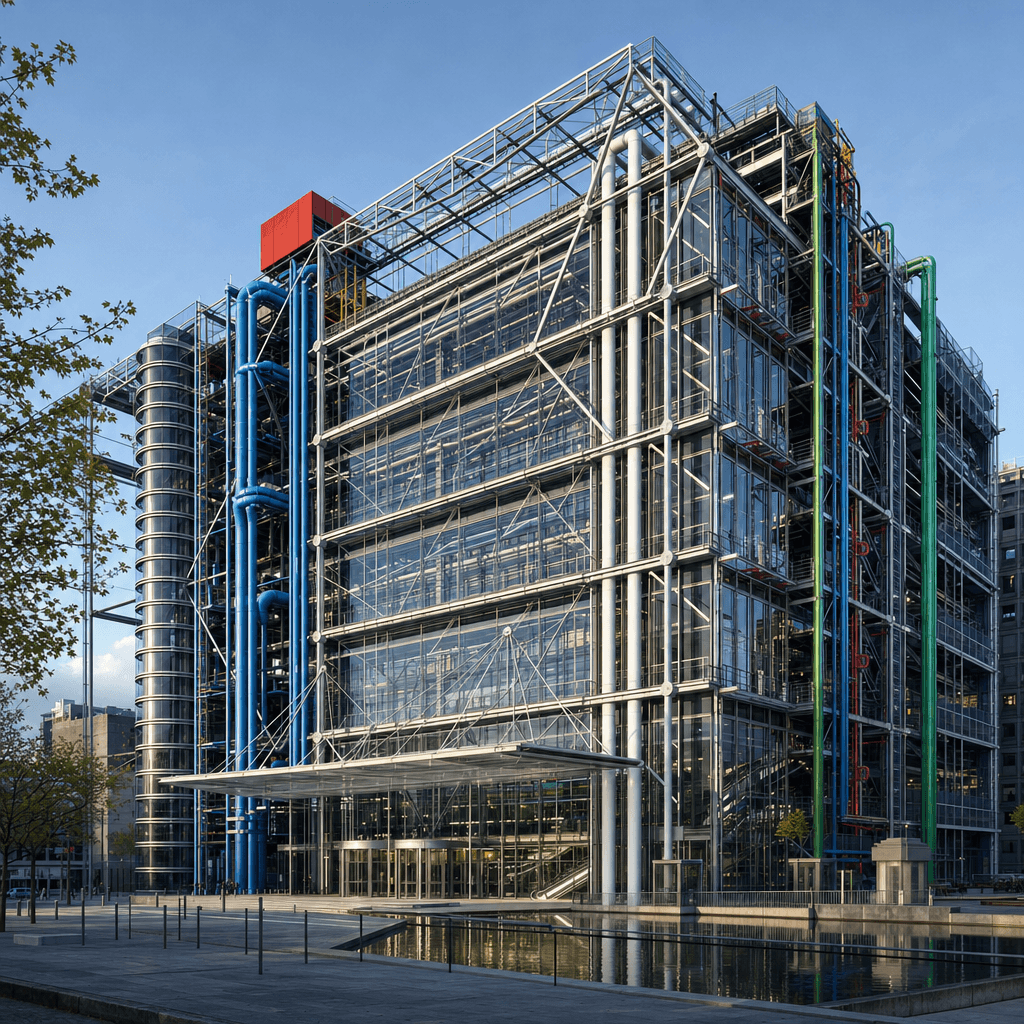
High Tech - characteristic facade composition within the digital and technology.
Context Snapshot
Technical, transparent, and systematically legible. Massing is additive and component-based - the building reads as an assembly of structural bays, service zones, and enclosure modules rather than a monolithic sculptural form. Originated in Britain in the 1970s with architects Norman Foster, Richard Rogers, Nicholas Grimshaw, and Michael Hopkins.
Contemporary Relevance
Today, High Tech remains relevant wherever projects need digital and technology cues without losing performance or contemporary usability. In Toscape it responds best when prompts emphasize massing is additive and component-based - the building reads as an assembly of structural bays, service zones, and enclosure modules rather than a monolithic sculptural form. structure: exposed structural steel - painted, galvanized, or stainless - expressed inside...
Use this style in Toscape
Explore High Tech directly inside Toscape using Facade Re-Style and design workflow prompts tuned for global architectural references.
Open High Tech in the gallery