Baroque
A01 / Classical / Grand Classical / Palace Ceremonial
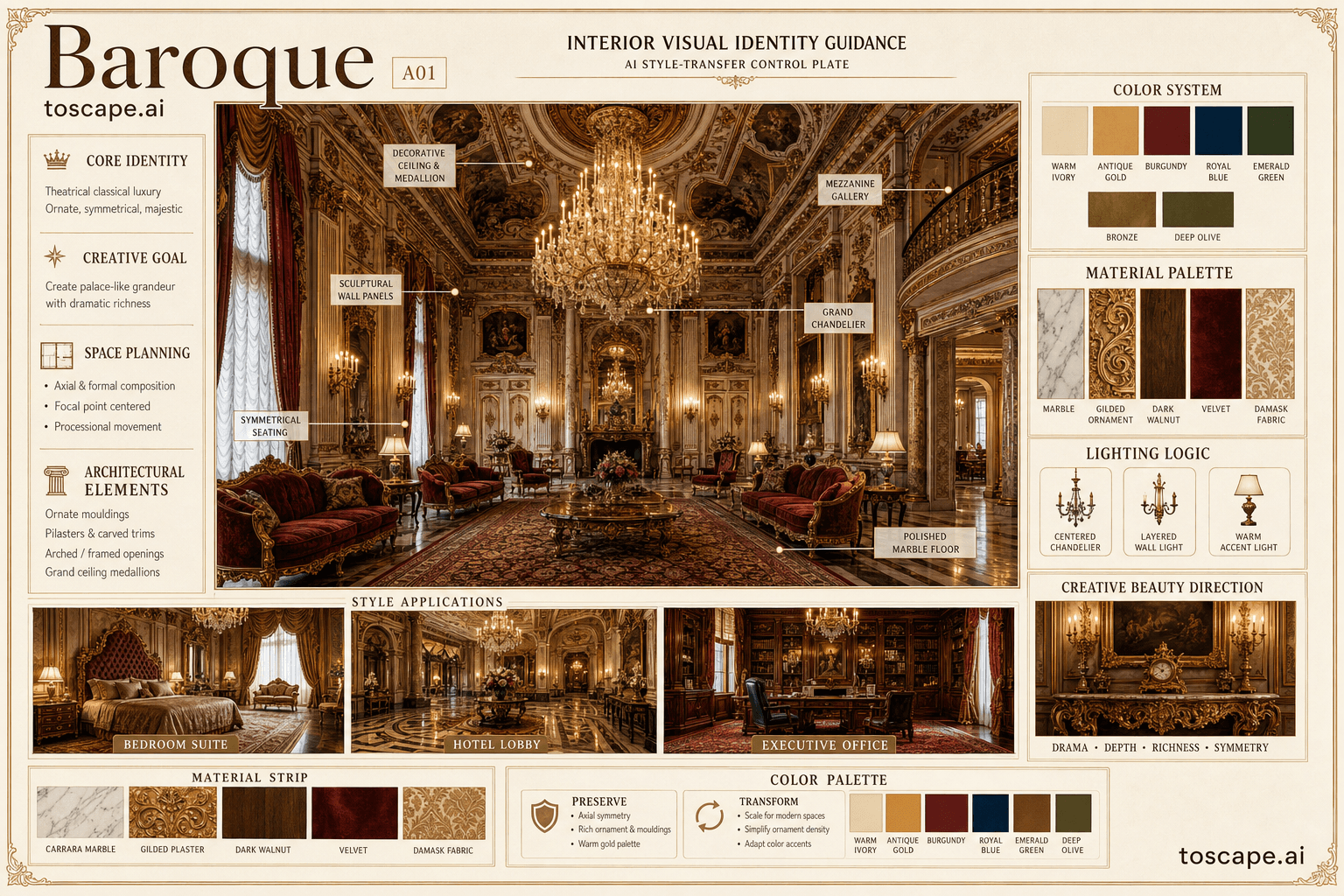
A grand theatrical classical interior style defined by sculptural ornament, gilded detail, rich materials, formal symmetry, and palace-like drama.
Overview
Baroque is an interior design style defined by A dramatic, theatrical classical interior identity defined by axial symmetry, sculptural ornament, gilded detail, rich materials, and ceremonial grandeur. To make the room feel majestic, theatrical, immersive, formal, and emotionally elevated.
Visual DNA
Spatial Feeling
Grand, theatrical, formal, luxurious, immersive, and visually powerful.
Form Language
Curved profiles, carved frames, scrollwork, volutes, heavy mouldings, arched or framed openings, and layered architectural depth. Tall and monumental proportions work best, with dominant focal points such as chandeliers, fireplaces,...
Composition
Formal, axial, room-based, and ceremonial, organized around a dominant focal point rather than casual open-plan randomness. Large chandelier, ornate mirror, fireplace, dramatic bed wall, central dining table, painted ceiling, carved...
Interior Elements
Ornate mouldings, raised panels, carved plaster, gilded frames, damask fabric, marble wainscoting, framed mirrors, and sculptural relief. Decorative ceilings with medallions, coffers, painted panels, gilded mouldings, layered cornices,...
Color System
Ivory plaster, antique gold mouldings, dark carved wood, burgundy velvet, crystal lighting, and polished marble. Use warm neutrals as a base, deep colors for textile richness, and gold or bronze for hierarchy and ceremonial highlights....
Material Palette
Polished, carved, gilded, velvet-rich, reflective, sculptural, layered, tactile, and luxurious. Architecture carries plaster, gilding, marble, and mirror; furniture carries carved wood and velvet; lighting carries crystal and warm...
Lighting Logic
Warm chandelier glow, sconces, ceiling wash, and indirect light integrated into classical profiles. Use warm directional highlights and soft shadows to reveal ornament, marble, velvet, crystal, and gilded depth. The chandelier should...
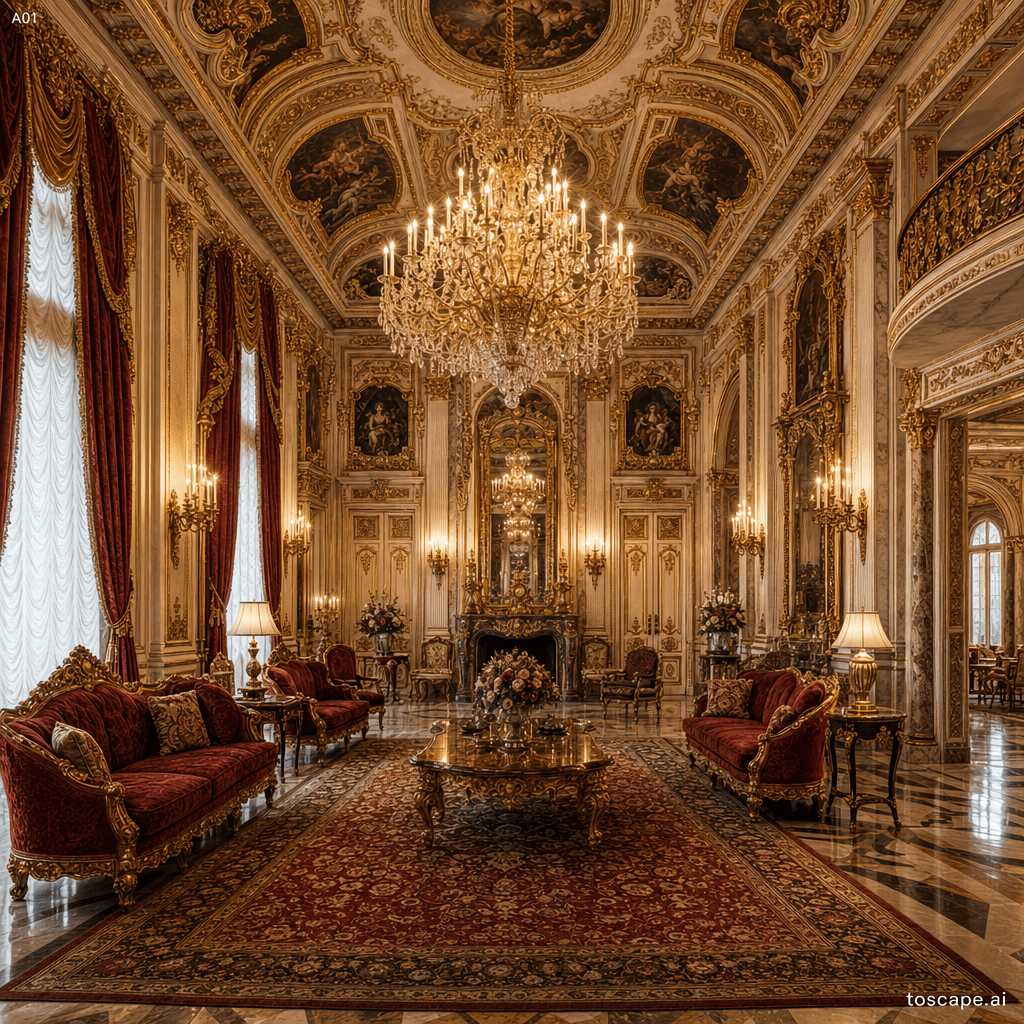
Interior reference image
Baroque composition, material palette, furniture language, and lighting direction.
Context Snapshot
European Baroque, associated with the 17th and early 18th centuries, especially palace, church, aristocratic, and ceremonial... Used selectively in luxury villas, palace interiors, formal reception rooms, hotel lobbies, fine-dining restaurants, wedding halls, and theatrical lounges. Keep the axial hierarchy, carved detail, warm gilded palette, rich textiles, and dramatic lighting, while editing clutter and improving usability.
Composition And Planning
Formal, axial, room-based, and ceremonial, organized around a dominant focal point rather than casual open-plan randomness. Movement should feel intentional and processional, leading toward a central mirror, fireplace, chandelier, dining table, or formal seating group. Use a centered or slightly off-center eye-level camera, with foreground furniture, a rich middle seating zone, and a strong background focal wall or chandelier axis.
Furniture Grammar
Formal, curved, carved, sculptural, symmetrical, and substantial. Arrange furniture symmetrically around a central table, fireplace, chandelier, mirror, or formal axis with clear circulation and strong visual hierarchy. - Carved giltwood armchair - Velvet formal sofa - Marble-top console - Chaise longue - Ornate dining table
Creative Direction
A grand formal salon with ivory carved walls, antique gold accents, marble flooring, velvet seating, crystal chandelier, and a dramatic central axis. Refined, curated, and spacious, with fewer but richer details, excellent lighting, controlled composition, and premium material close-ups. Darker, warmer, and more theatrical, using deep shadows, chandelier glow, burgundy velvet, bronze accents, and reflective marble. - Real depth in walls, ceiling, and trim - Warm metal finishes and controlled gilding - Rich textiles and polished stone - Balanced symmetry and strong focal hierarchy
Best Project Applications
- Luxury villas, formal salons, hotel lobbies, fine-dining restaurants, wedding halls, grand bedrooms.
Preserve, Transform, Avoid
Preserve
- Preserve axial symmetry and ceremonial hierarchy.
- Preserve ornate wall, ceiling, and trim language.
- Preserve rich warm materials, gilded accents, and sculptural detail.
- Preserve dramatic lighting, formal furniture, and luxury textile depth.
Transform
- Simplify ornament density for contemporary use while keeping Baroque hierarchy.
- Modernize comfort while retaining carved, curved, formal silhouettes.
- Use lighter ivory-and-gold palettes in smaller spaces.
- Refine accessory density while preserving richness and ceremony.
Avoid
- Minimalist flat walls with superficial gold accents.
- Casual, rustic, Scandinavian, industrial, or bohemian furniture.
- Cold grey palettes, blue-white lighting, and plastic finishes.
- Random ornament without symmetry, hierarchy, or architectural logic.
- Excessive clutter that hides the room's focal structure.
Use this style in Toscape
Explore Baroque inside Toscape using interior-focused rendering workflows and gallery references.
Open interior references