Bauhaus
F02 / Modern, Early Modernist, International Style, Minimalist, Design Classic
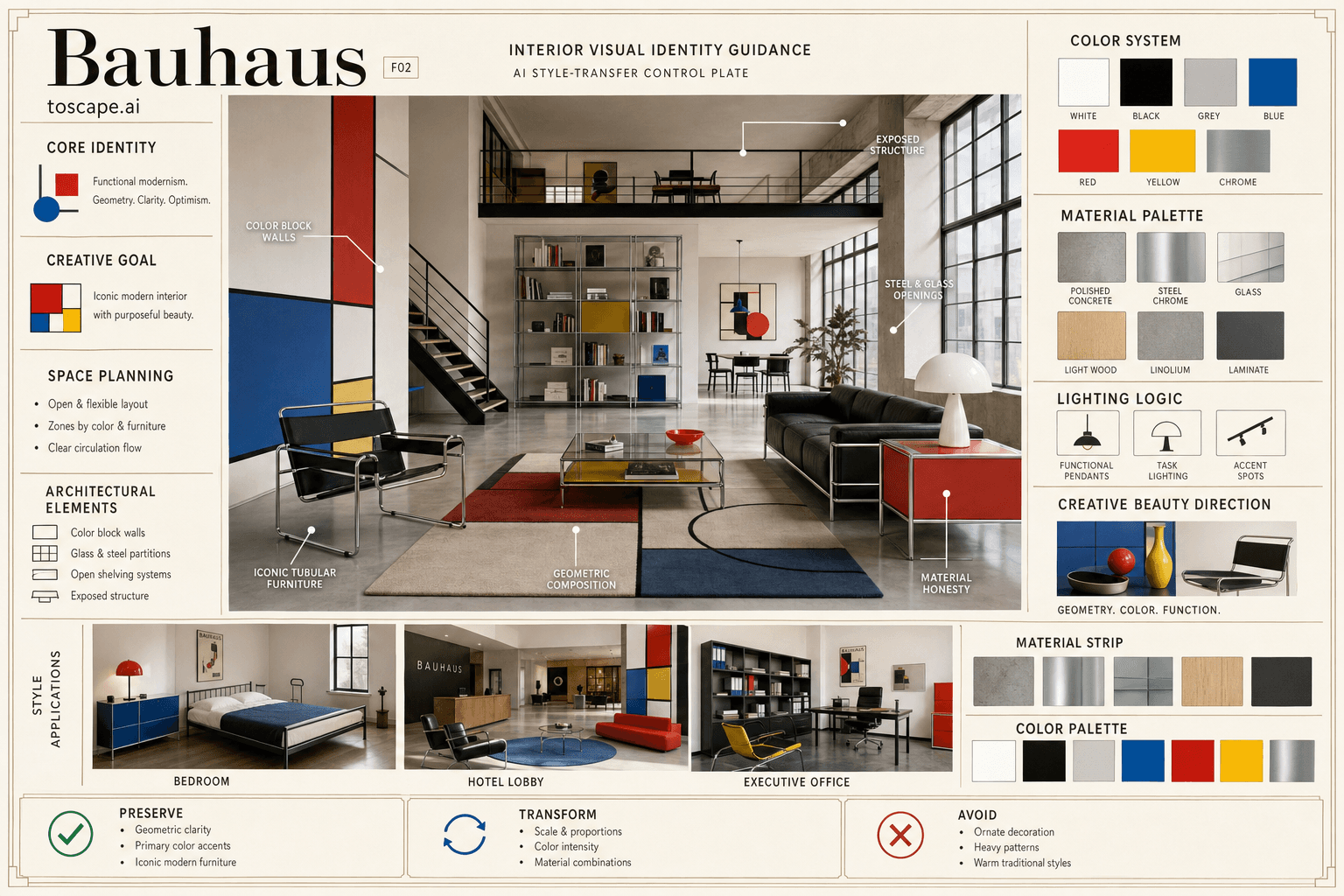
An iconic modernist interior style defined by geometric purity, functional clarity, iconic furniture, and expressive primary color accents.
Overview
Bauhaus is an interior design style defined by A rigorously modern interior identity defined by geometric purity, functional clarity, iconic furniture, honest materials, and an atmosphere of purposeful optimism. To create human-centered, purpose-driven living spaces where beauty emerges from structure, honesty, order, and playful color.
Visual DNA
Spatial Feeling
Open, optimistic, airy, functional, and orderly with lively color notes.
Form Language
Geometric and rectilinear forms-grids, rectangles, circles, and planes-with the occasional curve or arc; simple massing, honest structure, and crisp edges. Balanced, well-scaled open spaces; rooms should feel generous but ordered, with...
Composition
Open-plan, interconnected, airy, and non-ceremonial; built on flexibility and functional logic. Key furniture icons (e.g., Wassily Chair), bold color panels, modular shelving, or framed views through large windows. Use a slightly...
Interior Elements
Smooth, white or light-colored plaster or painted walls; bold color blocking is typical for focal zones; sometimes with industrial glass partitions or open shelving. Ceilings are plain, flat, and typically white, with exposed beams or...
Color System
White, black, chrome, a signature primary color (red, blue, or yellow), natural light wood, glass. Base is kept neutral; color is introduced in clear, saturated, primary palettes-never pastel, muddy, or gradient. Juxtapose color blocks...
Material Palette
Smooth, crisp, honest, subtly tactile, unembellished; any material change is functional rather than decorative. Hard materials dominate floors and structural elements; wood and color are used for warmth and accent; tubular...
Lighting Logic
Integrated linear strips, ceiling-mounted diffusers, plain pendants; base lighting is even and avoids drama. Indirect daylight with crisp shadow edges, balanced by discrete artificial light that sculpts geometry without drama. Lighting...
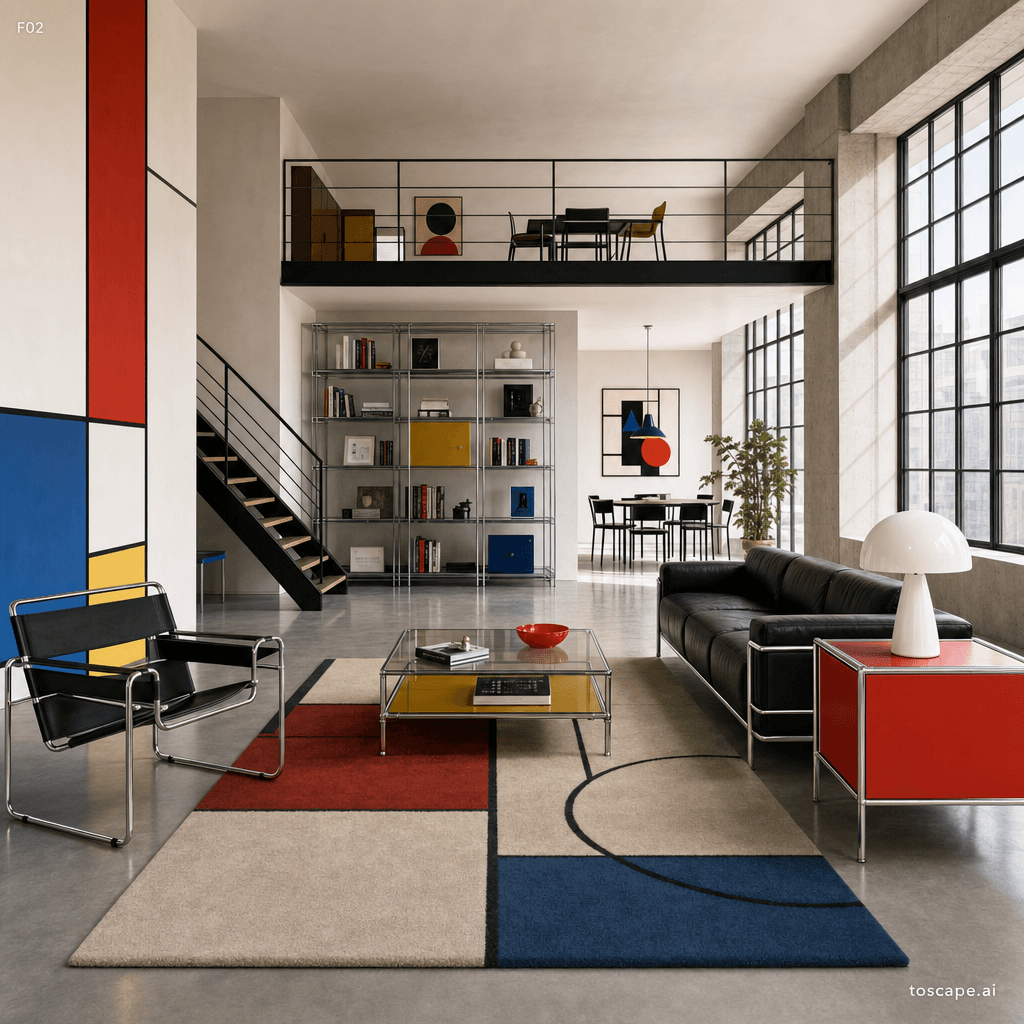
Interior reference image
Bauhaus composition, material palette, furniture language, and lighting direction.
Context Snapshot
Originating from the influential Bauhaus school in Germany (1919-1933), the style was pioneered by designers such as Walter... Found in design-led homes, creative workspaces, boutique hotels, art schools, design galleries, and residences for design collectors. Combine original material logic, clean spatial restraint, and iconic furniture with luminous natural light and judicious pops of color; materials and forms should feel fresh and celebratory, rather than cold or sterile.
Composition And Planning
Open-plan, interconnected, airy, and non-ceremonial; built on flexibility and functional logic. Movement feels fluid, logical, and unobstructed; circulation around and through furniture or open shelves gives a sense of freedom. Use a slightly elevated eye-level camera, capturing strong geometry, free-standing furniture, broad planes of color/material, and clear spatial depth.
Furniture Grammar
Simple, geometric, tubular, or cantilevered with crisp outlines and archetypal forms. Freestanding, loosely grouped to create open sightlines and geometric interaction; not overly anchored to walls or rugs. - Wassily Chair - Cesca Chair - Glass-and-steel coffee table - Breuer sideboard - Laccio table
Creative Direction
A bright, airy room with pristine white walls, polished concrete floors, classic Bauhaus furniture in chrome and black leather, geometric shelving, a graphic primary color panel, and abundant daylight animating crisp shadow lines. Sculptural composition, sharp camera angle, uncluttered open plan, bold Wassily chair in foreground, blue or yellow accent block, glass-and-steel side table, refined art-shot with luminous light and geometric focus. Use long diagonal daylight, sharp window shadows, a vivid red or blue accent, and a play of glass reflections for visual drama; icons like the Wassily chair anchor the space in glowing clarity. -...
Best Project Applications
- Design-led living rooms, creative studios, modern offices, boutique lobbies, art-inspired homes.
Preserve, Transform, Avoid
Preserve
- Honest, simple geometric forms and spatial order
- Signature iconic tubular steel furniture
- Authentic modern material palette-steel, glass, wood, concrete
- Bold but disciplined use of primary accent color
Transform
- Refine color blocking for fresh, contemporary vibrancy
- Integrate modern lighting advances within classic fixtures
- Curate art and graphic objects for editorial impact
- Enhance material richness (e.g., better wood grains, real steel) while retaining clarity
Avoid
- Ornate decorative motifs, cornices, or trims
- Rustic, distressed, or faux-aged finishes
- Overstuffed, rounded, or traditional furniture silhouettes
- Excessive softness or warmth that breaks identity
- Superficial use of color, materials, or icons without spatial clarity
Use this style in Toscape
Explore Bauhaus inside Toscape using interior-focused rendering workflows and gallery references.
Open interior references