Empire Ceremonial
A05 / Grand Classical / Ceremonial Historicist / Monumental Palace
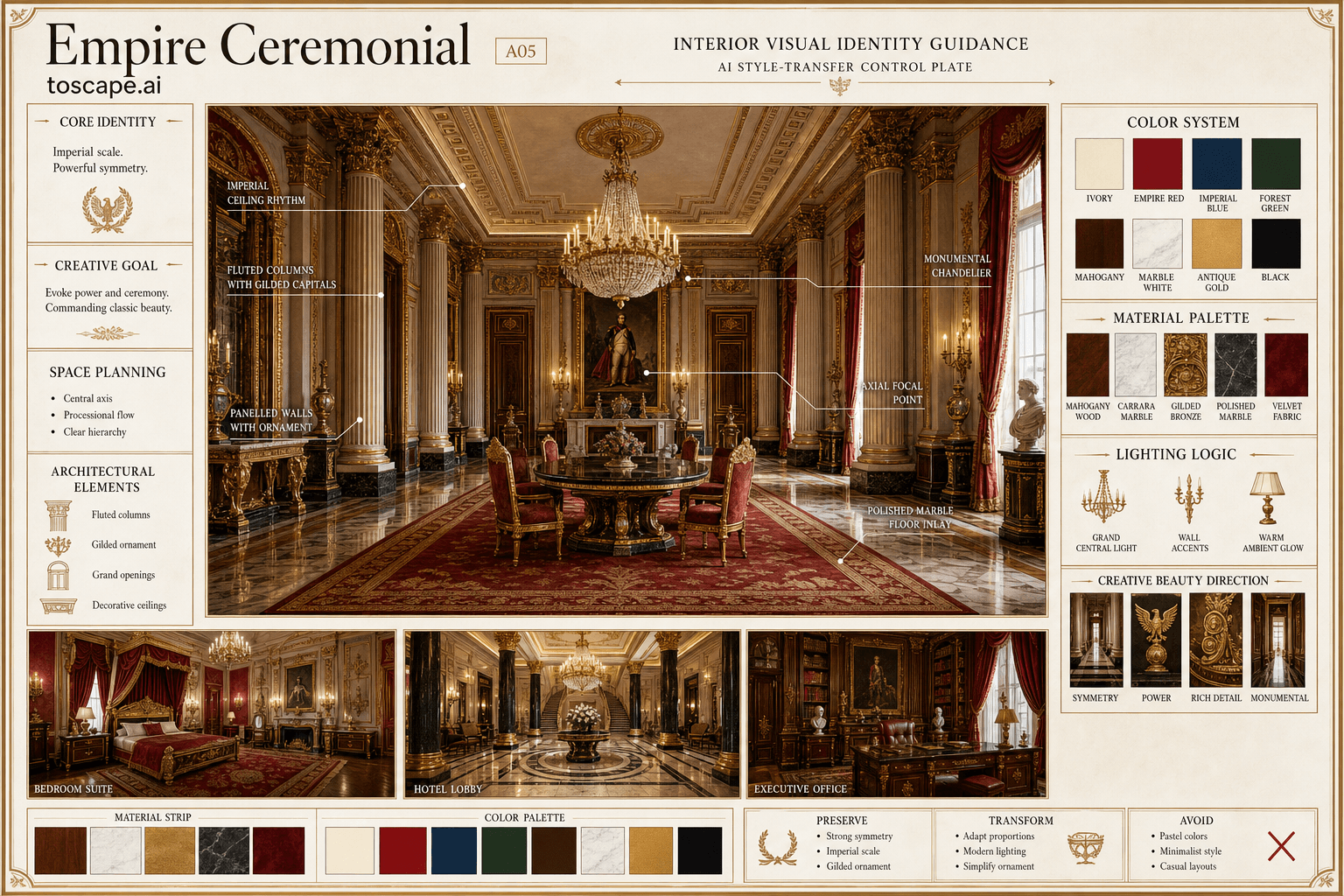
A grand, architectural, classically imperial interior defined by monumental symmetry, bold columns, gilded detail, deep woods, and ceremonious...
Overview
Empire Ceremonial is an interior design style defined by A monumental, powerfully axial classical interior defined by imperial scale, strong symmetry, heroic ornament, bold columns, gilded detail, rich woods, and ceremonial grandeur. To evoke power, ceremony, and permanence through architectural clarity, visual discipline, and grand imperial beauty.
Visual DNA
Spatial Feeling
Majestic, formal, powerful, imposing, and grandly ceremonial.
Form Language
Strongly rectilinear geometry, grand arches, fluted columns, square pilasters, oversized doorways, bold stepped cornices, and regal neoclassical motifs (festoons, palmettes, laurel wreaths, acanthus, eagles, lyres). Monumental...
Composition
A formal, processional layout with rooms organized along central axes, often terminating in architectural focal points (throne, fireplace, mirror, major artwork, grand table). Centralized fireplaces, thrones, oversized mirrors,...
Interior Elements
Tall, strongly panelled walls, fluted pilasters, large gilded mirrors, painted friezes, deep wood or ivory baseboards, and neoclassical ornament in architectural registers. Imposing decorative ceilings: coffered or flat with oversized...
Color System
Ivory, gold, deep red, dark wood, highlighted with marble and disciplined blue or green accents. Balance rich darks and luminous gilded elements against serene creams and strong color blocks for imperial depth. Deeper reds or blues,...
Material Palette
Richly tactile; deep wood grain, smooth marble, crisp gilding, velvet/silk, cast bronze, and elaborate woven textiles. Wood and marble for main surfaces and architectural features; gilding for trims and focal accents; textiles/ mirror...
Lighting Logic
Large-scale chandeliers dominate, delivering warm, opulent illumination; wall sconces with gilded mounts and candelabra accents reinforce formality. Use raked light and golden glow to highlight gilding, dramatic shadows to articulate...
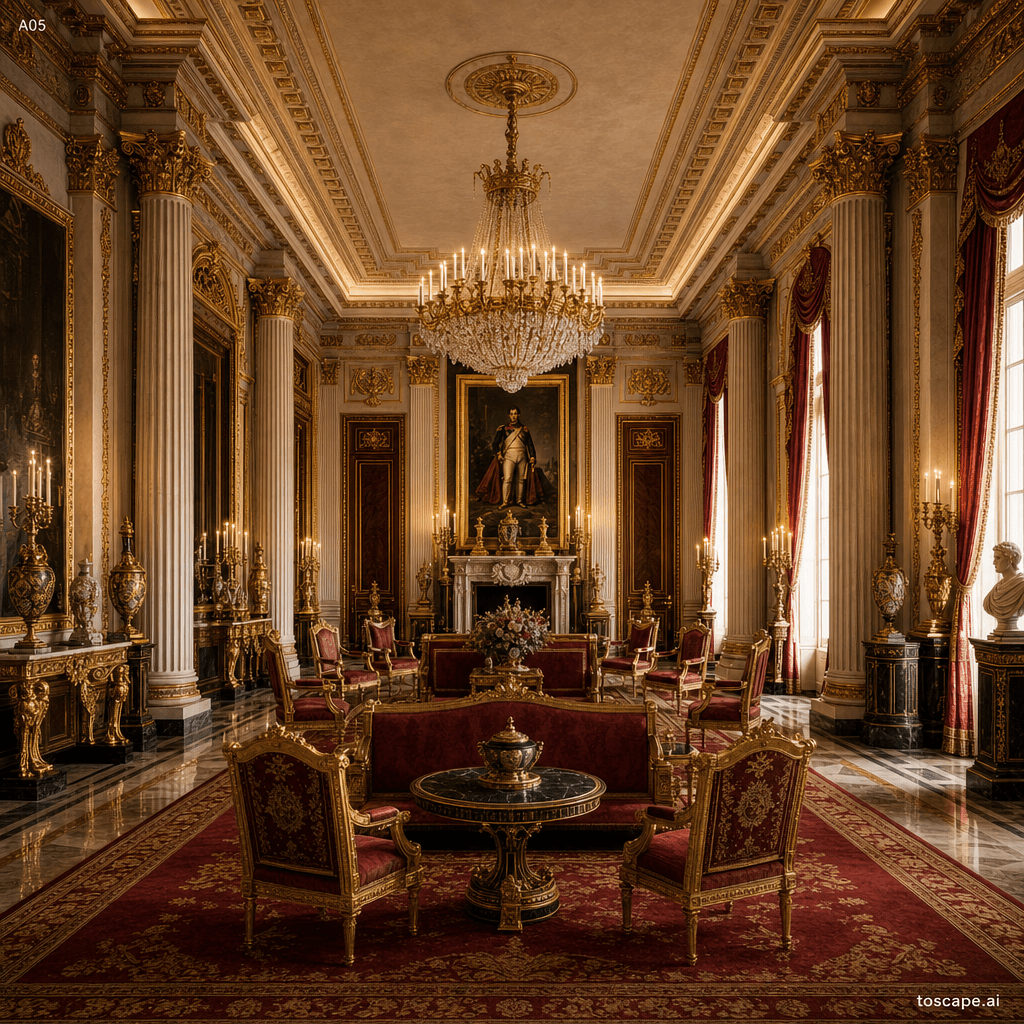
Interior reference image
Empire Ceremonial composition, material palette, furniture language, and lighting direction.
Context Snapshot
Emerging from early 19th-century France during Napoleon's reign, the Empire style interprets Roman and Greek classical... Reserved for signature spaces in private palaces, hotels, embassies, ceremonial halls, and selective luxury villas seeking imperial formality. Retain the core monumentality, axial logic, gilded highlights, and rich woods-edit clutter, sharpen lines, scale ornament elegantly, and subtly modernize lighting and comfort.
Composition And Planning
A formal, processional layout with rooms organized along central axes, often terminating in architectural focal points (throne, fireplace, mirror, major artwork, grand table). Movement is processional, guiding the eye and foot along key axes to strong focal points. Use centered or slight three-quarter perspectives, eye-level or slightly elevated camera, and a pronounced sense of symmetry and depth; foreground columns, dramatic middle zones, and a heroic focal point in the background.
Furniture Grammar
Monumental, rectilinear, robust, classical profiles with sharp lines and bold mass. Organized with strict formality-anchored on central axes, paired where possible, all seating and tables arranged symmetrically or in formal procession. - Gilded imperial throne-style armchair - Mahogany settee or dining chair with carved accents - Bold console or pedestal table with bronze mounts
Creative Direction
A monumental, columned ceremonial hall with symmetrical deep wood paneling, gilded capitals, imperial red or blue drapery, a polished marble floor, and a dazzling crystal chandelier centering the space in a palace. Crisp formal composition, flawless lighting on gilded and wood textures, impeccably styled symmetrical furniture, featured artwork or mirrors, and an atmosphere of dignified calm and imperial grandeur. Dramatic, shadowy lighting with strong golden glows, deep red textiles and polished wood shining under raking light, foreground columns, and a glowing chandelier as central jewel. - Real monumental architectural mass - Polished...
Best Project Applications
- Palaces and ceremonial halls, luxury villa salons, ambassadorial state rooms, hotel lobbies.
Preserve, Transform, Avoid
Preserve
- Heroic monumentality and strict symmetry
- Architectural order with columns/pilasters and bold paneling
- Deep, rich materials-dark woods, gilded trims, marble
- Central ceremonial axis, chandelier, and imperial palette
Transform
- Carefully streamline ornament to improve clarity and comfort, never at the cost of imperial dignity
- Update upholstery comfort and textile selection in historic silhouettes
- Conceal modern lighting within classical forms
- Use premium large-format materials for a contemporary but imperial feel
Avoid
- Diluting columns or key motifs into weak surface patterns
- Accepting weak, pastel, or washed-out color schemes
- Introducing casual, bohemian, Scandinavian, or minimal elements
- Random, superficial gold accessories without architectural depth
- Untethered modern layout or open-plan informality
Use this style in Toscape
Explore Empire Ceremonial inside Toscape using interior-focused rendering workflows and gallery references.
Open interior references