Industrial
L01 / Urban, Loft, Neo-Industrial, Modern, Contemporary, Retro-Modern, Adaptive Reuse
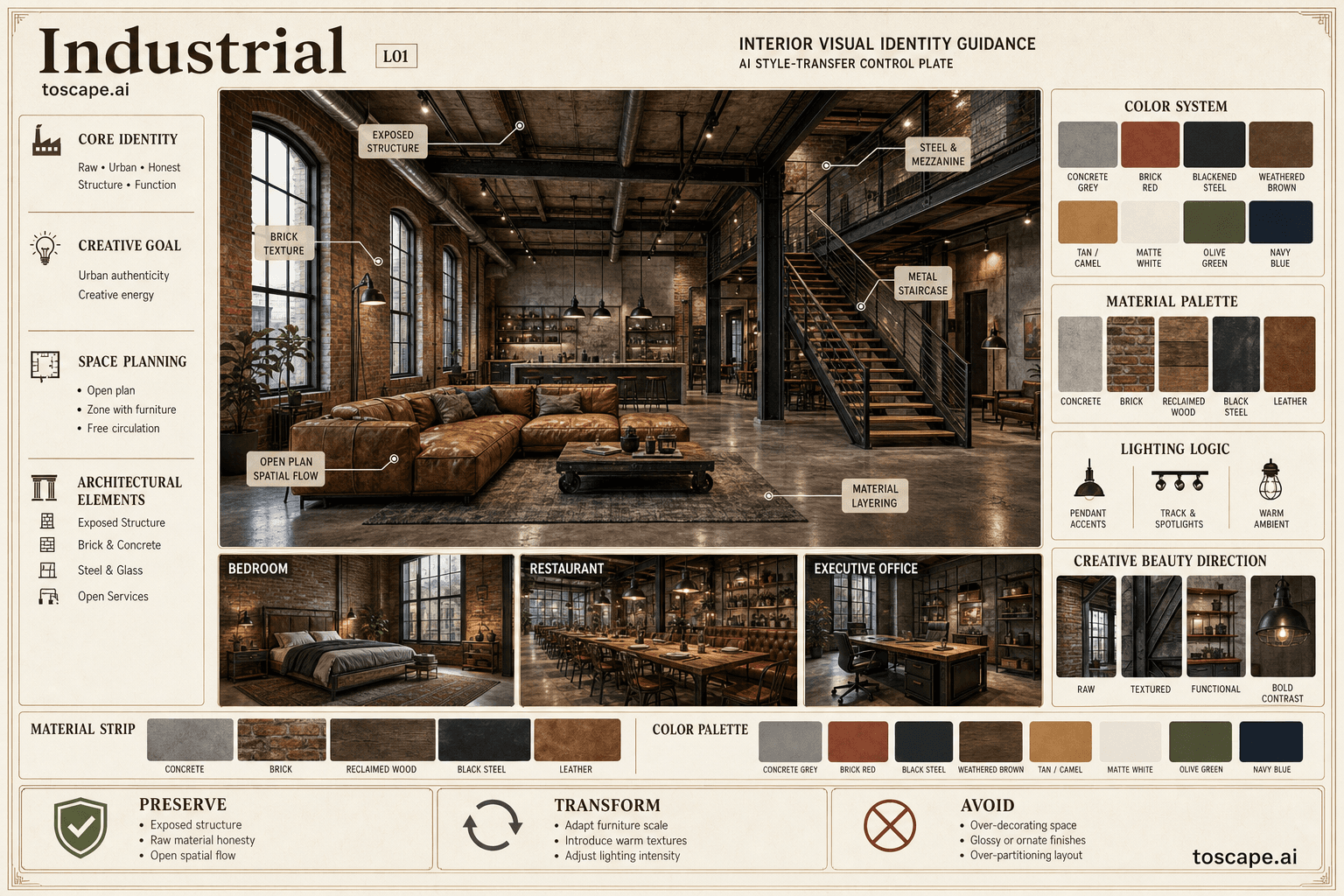
Urban and raw interiors defined by exposed structural elements, open plans, robust materiality, and a modern factory sense of space.
Overview
Industrial is an interior design style defined by Industrial is a raw, urban, and honest interior style defined by exposed structure, rugged materials, open layouts, and a fusion of historic factory aesthetics with contemporary simplicity. To evoke urban authenticity, creative energy, and spacious informality through raw materials and functional design elements.
Visual DNA
Spatial Feeling
Open, unrestrained, and urban; spaces feel airy yet grounded and dramatic.
Form Language
Strong horizontal and vertical lines, simple geometric forms, robust silhouettes, exposed frames, mechanical elements, and large expanses with minimal ornament. Lofty volumes are best, with generous heights, broad spans, and a sense of...
Composition
Open-plan layouts dominate, with few walls; zones are often visually anchored rather than physically separated. Strongest focal points are often brick or concrete walls, black steel-framed windows, sculptural lighting, or a showpiece...
Interior Elements
Exposed brick, raw or board-formed concrete, unfinished plaster, blackened steel, and occasional painted or whitewashed walls for relief. Structure is celebrated-beams, ductwork, and mechanical systems remain visible; finishes are often...
Color System
Pair concrete, natural brick, softening taupe or tan leather, and blackened steel in balanced, high-impact contrast. Let raw grey and brick tones dominate; add warmth with wood/leather, ground with black steel, and relieve tension with...
Material Palette
Rough, worn, organic, unfinished-emphasize tactile contrast between cold (metal, concrete) and warm (wood, leather). Structure (ceiling, columns, window frames) uses steel and concrete; main walls use brick/concrete; floors alternate...
Lighting Logic
Ceiling pendants, minimal track lighting, and integrated LED strips attached to beams, conduits, or exposed channels. Strong side/raking light, hard-edged shadow, luminous spot accents, controlled pools of light and darkness. Lighting...
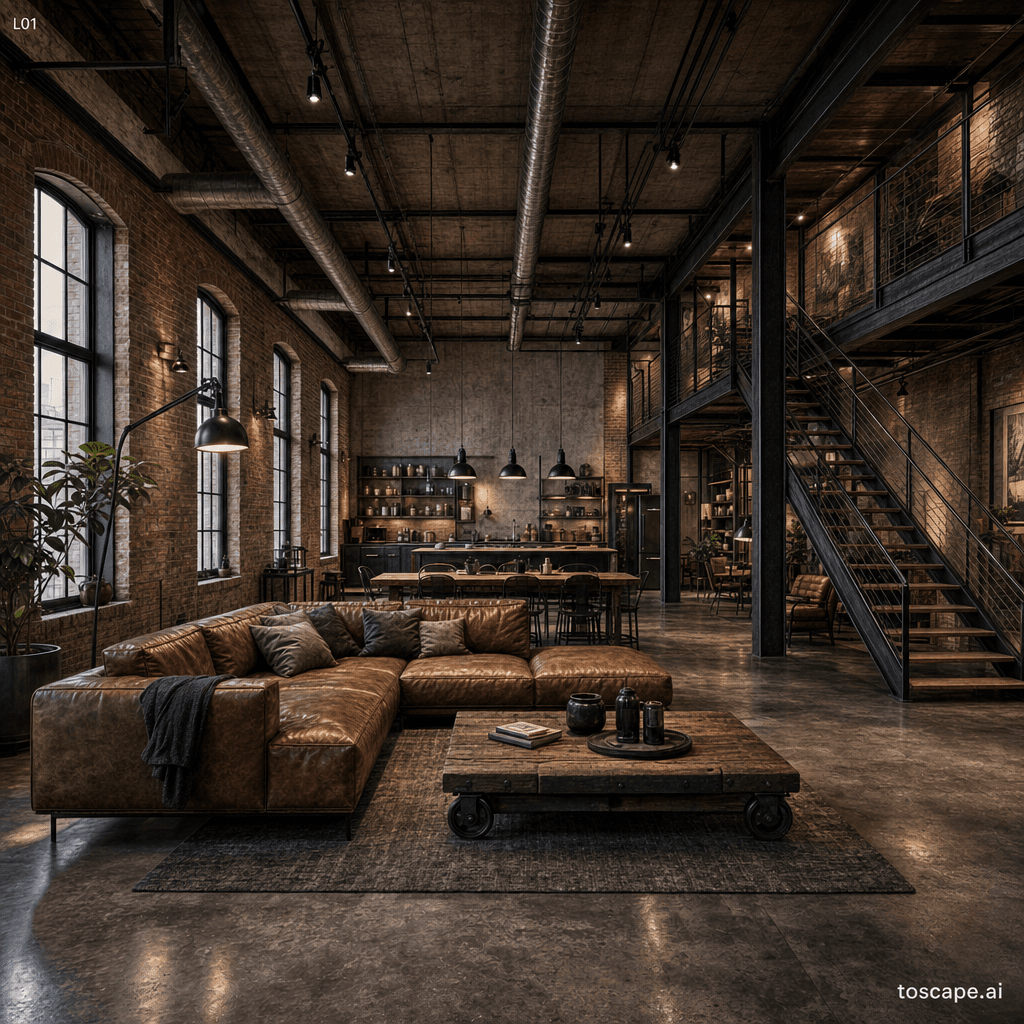
Interior reference image
Industrial composition, material palette, furniture language, and lighting direction.
Context Snapshot
Industrial interiors originate from the adaptive reuse of factories and warehouses, gaining popularity in late-20th-century... Currently used in trendy apartments, lofts, design-led offices, cafes, restaurants, showrooms, retail, and creative studios. Keep structure and materials exposed, balance roughness with select comfortable furnishings, edit clutter, and focus on spatial openness and strong textures.
Composition And Planning
Open-plan layouts dominate, with few walls; zones are often visually anchored rather than physically separated. Circulation flows freely through the space; visual openness supports organic movement and social gathering. A mid/low camera angle emphasizing depth, leading lines from beams or flooring, a layered sequence from rough backdrop to hero object, and a strong side or backlight.
Furniture Grammar
Bold, low-profile, rectilinear, sturdy, and simple forms, often referencing vintage or workmanlike industrial design. Furniture floats and anchors the space, respecting architectural axes rather than hugging walls; align groupings with columns, windows, or major material transitions. - Leather or canvas industrial sofa - Steel/wood workbench table - Tolix, Eames, or vintage machinist chairs - Metal locker cabinet
Creative Direction
A voluminous open loft with sun slanting through black steel windows, tactile brick and concrete backdrops, robust reclaimed wood, designer lighting, and an artfully composed blend of comfort and rawness. Clean, curated, structurally celebrated-with carefully composed vignettes, minimal but bold objects, clear sightlines, and powerful contrasts of shadow, light, and texture. Low-key lighting, dramatic shafts of side or backlight illuminating dust and patina, strong silhouettes of furniture, and architectural features emerging from moody shadows. - Real, tactile materials and visible structure - Designer industrial lighting and premium...
Best Project Applications
- Loft apartments, creative studios, urban restaurants, design offices, hospitality lounges.
Preserve, Transform, Avoid
Preserve
- Exposed authentic structure: brick, concrete, and steel.
- Bold open-plan layouts with minimal internal partitioning.
- Honest, robust materials with visible patina and wear.
- Industrial fixtures and functional, statement lighting.
Transform
- Introduce large-format art for visual drama without losing industrial backbone.
- Combine premium upholstery or designer pieces with foundational industrial materials.
- Use new technology for improved comfort and lighting while keeping all finishes material-honest.
- Layer in curated greenery or select textile for warmth without losing grit.
Avoid
- Faux finishes or fake industrial props.
- Over-layered vintage, bohemian, or decorative accessories.
- Closing down open space with too many partitions or overstuffed layouts.
- Ornate trim, classical columns, or decorative mouldings.
- Bright synthetic colors or high-gloss plastics.
Use this style in Toscape
Explore Industrial inside Toscape using interior-focused rendering workflows and gallery references.
Open interior references