Japanese Zen
P01 / Minimal / Organic / Asian / Contemplative / Naturalistic
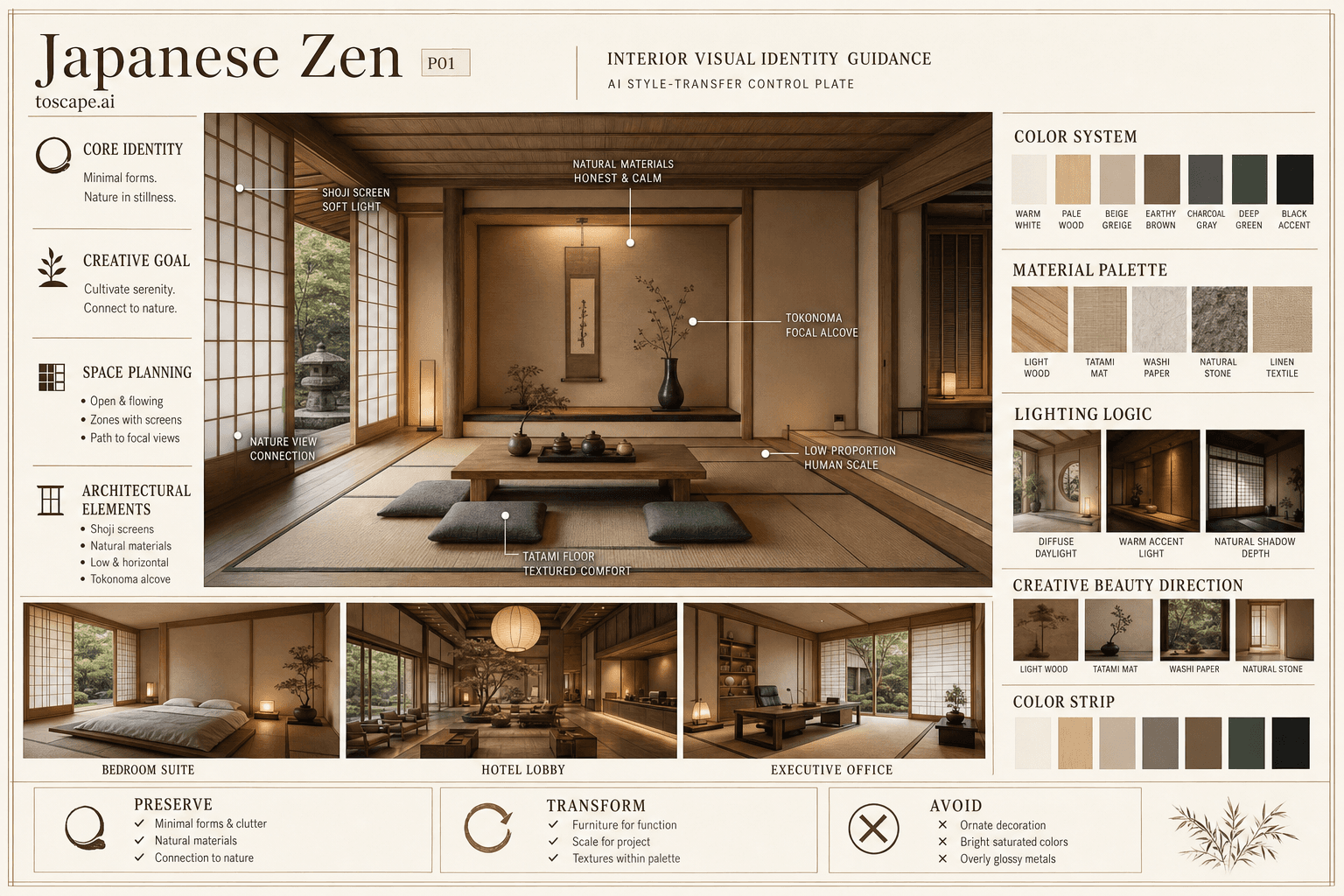
A meditative Japanese minimalist interior style defined by negative space, natural materials, filtered light, and pure calm.
Overview
Japanese Zen is an interior design style defined by A pure, contemplative interior environment defined by minimal forms, natural materials, diffuse light, balanced emptiness, and a serene, meditative spatial atmosphere. To cultivate serenity, mindfulness, and clarity by removing visual noise and connecting inhabitants to nature through restraint and thoughtful material purity.
Visual DNA
Spatial Feeling
Silent, peaceful, ethereal, welcoming, and contemplative-like stepping into a living meditation.
Form Language
Simple rectilinear shapes, low horizontal lines, sliding panels (shoji), minimal joinery, organic structural rhythm, gentle transitions, and occasional curvilinear elements inspired by nature. Balanced, horizontal, often low to the...
Composition
Open, flowing, modular, zone-based with sliding or flexible partitions; the plan encourages ambiguity between inside and outside. Tokonoma (art/flower alcove), framed garden/nature view, solitary stone, minimal art, accent lighting on a...
Interior Elements
Plain natural plaster (shikkui), paper, raw wood, soft stucco, or stone-clean vertical panels, shoji screens, rhythmic joinery, occasional alcoves (tokonoma) or nooks. Ceilings are simple, flat, or exposed timber beams in pale wood; no...
Color System
Sun-bleached timber, washi white, warm mat straw, pale stone, dappled green, muted earth. Analogous, ultra-restrained palette; colors are drawn from nature and sunlight, never artificial or synthetic. Carefully limited-if desired, add...
Material Palette
Organic, matte, tactile-visible wood grain, straw weave, fine paper, earth, raw smooth stone, and soft textile touch. Wood and straw dominate floor, partitions, and ceiling; washi paper in screens, lamps, and panel infill; stone as...
Lighting Logic
Gentle, indirect, warm-paper lanterns, cove lighting, soft floor lamps using washi shades. Harness interplay of diffuse natural light, soft shadows, and golden evening glow through paper and timber to evoke calm and emotional depth....
Interior reference image
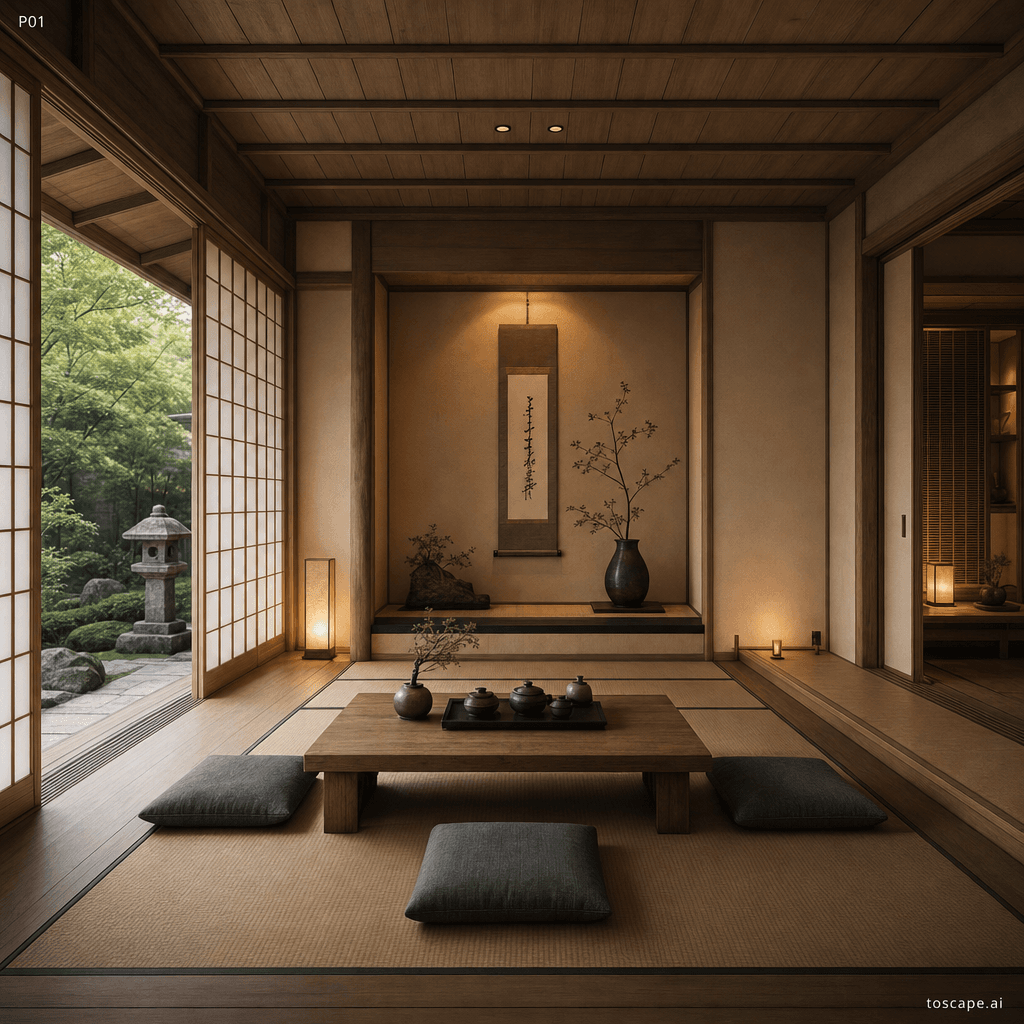
Japanese Zen composition, material palette, furniture language, and lighting direction.
Context Snapshot
Rooted in Zen Buddhist philosophy and Japanese traditional architecture-especially the aesthetics of temples, tea houses, and... Applied in boutique homes, luxury spas, wellness retreats, high-end hospitality, and refined workplaces to foster calm, presence, and focused clarity. Use authentic materials, soft natural light, perfectly judged restraint, and organic asymmetry; allow for the integration of high-quality joinery and contemporary comfort without disturbing the meditative atmosphere.
Composition And Planning
Open, flowing, modular, zone-based with sliding or flexible partitions; the plan encourages ambiguity between inside and outside. Gently meandering; movement is unhurried, guided by paths, stepping stones, or axis lines leading to focal views, nature, or alcove (tokonoma). Best at mid or low camera height, capturing foreground mats, middle ground seating/table, and a background shoji or framed view; seek calm off-center compositions with clear light paths.
Furniture Grammar
Low, minimal, rectilinear, quiet, refined-often "disappearing" into the architecture; occasional organic curves as a quiet accent. Sparsely placed; arranged in informal groupings, slightly off-center, often facing nature or art niche, supporting generous negative space and peaceful flow. - Low timber chabudai table - Tatami seating arrangement - Built-in shoji cabinetry
Creative Direction
A softly sunlit room with pale timber floor and beams, immaculate tatami layout, a single ikebana in a tokonoma, filtered garden view through shoji, and perfectly balanced negative space that makes the air itself feel calm. Polished, clean, with tactile joinery close-ups, visible shoji grid, delicate shadows, and one meticulously arranged table scene-no visual noise, only intentional beauty. Evening sun filtered by shoji, glowing lanterns, deep shadow play, a tranquil moss garden just outside the frame-stillness and mood saturate the scene. - Impeccable craftsmanship, invisible joinery - Perfect proportional restraint and clarity - Honest...
Best Project Applications
- Meditation rooms, spa lounges, tranquil living spaces, boutique hotel suites, minimalist bedrooms, wellness retreats.
Preserve, Transform, Avoid
Preserve
- Integrate negative space (ma) and allow visual breathing room
- Use natural materials and honest textures
- Maintain restrained, low, and modular furniture logic
- Always honor a connection to nature through light, plant, or view
Transform
- Refine joinery detail for premium contemporary appeal
- Allow discreet modern comfort so long as the atmosphere remains silent and mindful
- Introduce subtle technology only if invisible and non-disruptive
- Layer screens or lighting for renewed drama while keeping restraint
Avoid
- Western-style luxury decor, plushness, and status display
- Bright synthetic colors or patterned fabrics
- Over-furnishing or clutter of accessories
- Industrial, cold, or urban materials
- Faux Japanese detailing disconnected from function or ritual
Use this style in Toscape
Explore Japanese Zen inside Toscape using interior-focused rendering workflows and gallery references.
Open interior references