Renaissance Revival
A03 / Grand Classical / Monumental Heritage / Historic Luxury
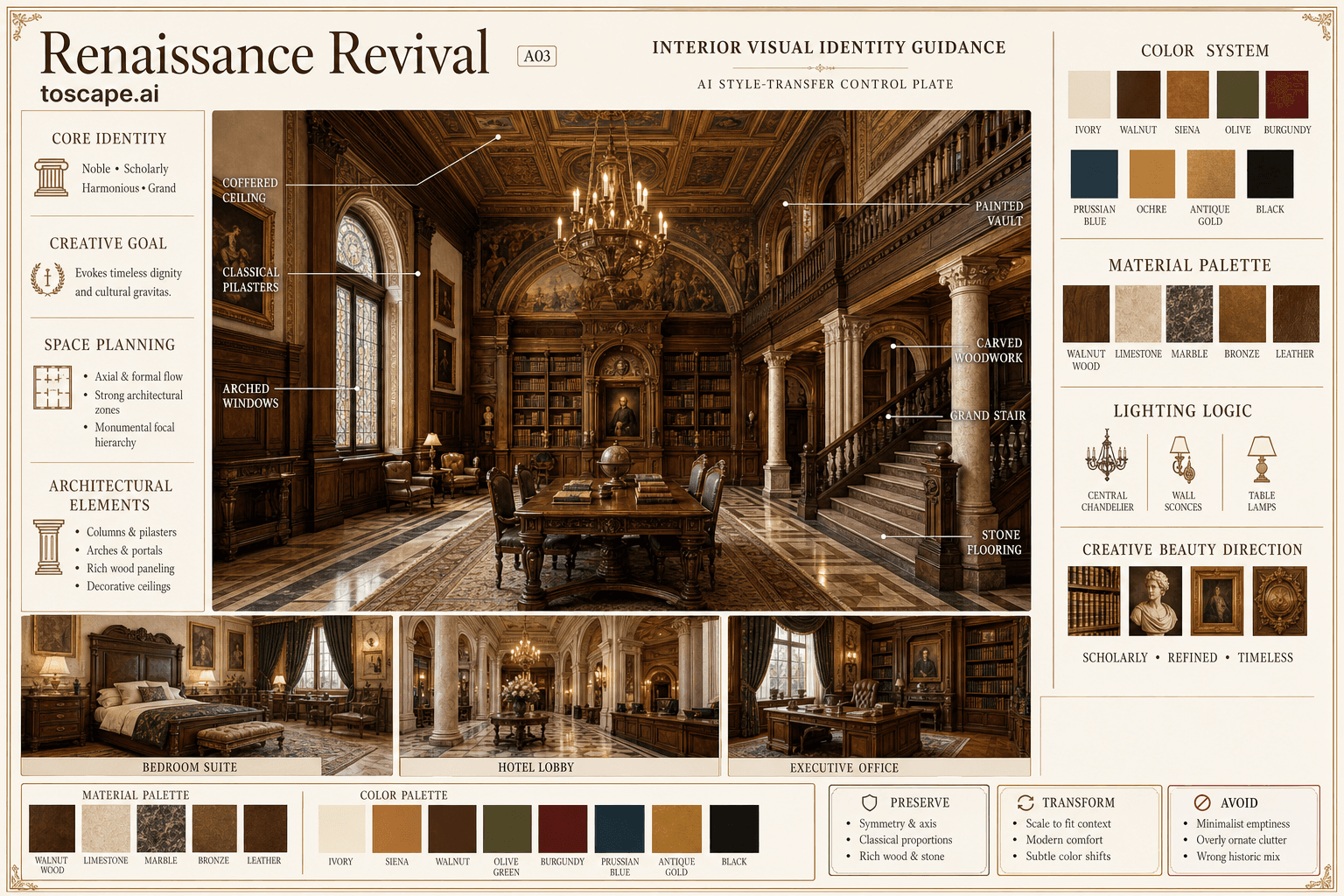
A grand, scholarly classical interior style defined by monumental woodwork, arched forms, symmetry, and timeless heritage luxury.
Overview
Renaissance Revival is an interior design style defined by A noble, scholarly, and harmonious classical style defined by grand proportions, refined classical motifs, strong symmetry, rich woodwork, and architectural gravitas. To evoke timeless dignity, learned refinement, and cultural gravitas through monumental yet balanced classical forms and materials.
Visual DNA
Spatial Feeling
Majestic, balanced, dignified, scholarly, calm, and confidently grand.
Form Language
Strong right angles, harmonious grids, arches, barrel vaults, grand wall panels, recessed niches, columns or pilasters, carved woodwork, and framed ceilings. Tall or lofty spaces with balanced wall and ceiling divisions; architectural...
Composition
Formally arranged, often axial or perimeter-focused, with strong wall zones, clear circulation, and a dominant focal area. Central arch, fireplace, grand bookcase, feature ceiling, ornate desk, or significant artwork anchored by columns...
Interior Elements
Rich wood paneling, pilasters, deep wall frames, plaster, limestone, framed murals or art, classically proportioned divisions. Decorative ceilings-painted, coffered, beamed, or barrel-vaulted-often with classical mouldings or framed...
Color System
Ivory plaster, walnut wood, Siena stone, antique brass, muted green or burgundy fabrics, classic artwork. Base palette is dignified and grounding; complementary deep tones add depth, with restrained use of metallics for hierarchy. Deep...
Material Palette
Substantial, tactile, and layered; polished wood, honed stone, soft yet rich fabrics, and aged metal; never sharp, raw, or synthetically shiny. Wood for walls, ceilings, doors; stone for flooring and focal trims; textiles for visual...
Lighting Logic
Warm diffused ceiling fixtures, classic chandeliers, or concealed cove light in coffers; never harsh or clinical. Use directional light to emphasize ceiling coffers, archways, wood carving, and focal art; layer with shadow for depth....
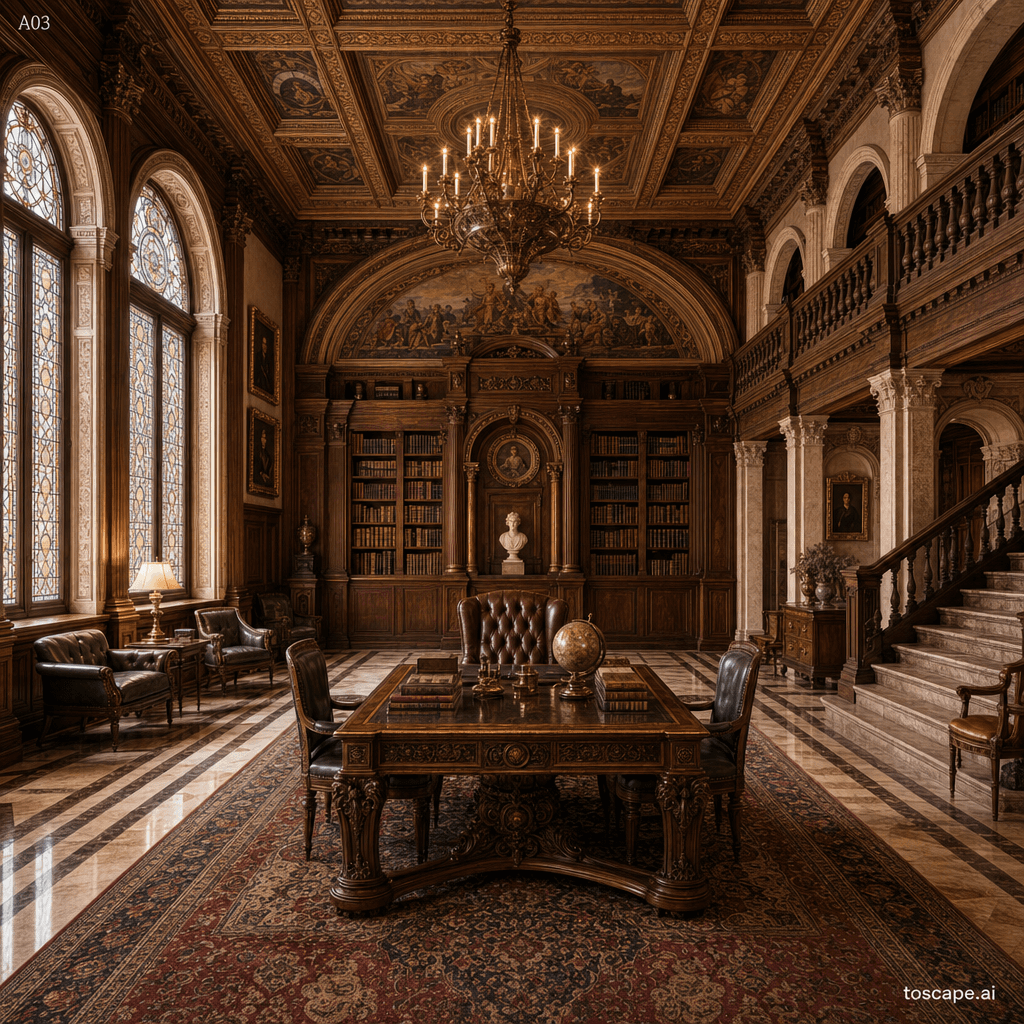
Interior reference image
Renaissance Revival composition, material palette, furniture language, and lighting direction.
Context Snapshot
Emerged in 19th-century Europe and America as a revival of 15th-16th century Italian Renaissance style, often associated with... Used in luxury residential interiors, ceremonial halls, government buildings, upscale hotels, heritage restoration, and high-end restaurants seeking classical gravitas. Interpret with grand but edited classical forms-arched doors, strong columns or pilasters, rich wood, restrained mural or coffered ceilings, and harmonious arrangement-using high-quality materials and lighting.
Composition And Planning
Formally arranged, often axial or perimeter-focused, with strong wall zones, clear circulation, and a dominant focal area. Movement feels processional and intentional, drawing the eye toward primary architectural features or ceremonial focal points. Use an eye-level or slightly elevated camera, centered axis, foreground anchoring (rug, table, column), and strong perspective depth toward a dignified focal wall or ceiling feature.
Furniture Grammar
Solid, sculpted, classical forms with strong profiles; rectangular and curved backs; carved legs and arms. Arranged symmetrically, around a focal point or axis; groupings encourage formal conversation or scholarly reflection. - Carved Renaissance revival armchair - Walnut library table - Marble-top console - Button-tufted sofa - Grand bookcase
Creative Direction
A grand, symmetrical library or formal salon with carved walnut paneling, coffered or painted ceiling, monumental arches, a classical fireplace, deep velvet seating, and scholarly art-bathed in warm, dignified light. Composed, clear, and breathtaking-focusing on perfect axial symmetry, crisp shadows, curated art, tactile wood and stone, and just enough ornate detail for unmistakable heritage. Moody, golden-hour light streaming through tall windows, casting shadows on carved wood, painted ceiling detail, stacks of old books, and a monumental stone hearth. - Real woodwork and stone detail - Architectural depth (arches, coffers, panels) -...
Best Project Applications
- Luxury libraries, formal living rooms, ceremonial halls, stately dining rooms, grand hotel lobbies.
Preserve, Transform, Avoid
Preserve
- Strict or soft grand symmetry
- Monumental wall and ceiling frameworks: columns, arches, coffers
- Scholarly gravitas through materials and color
- Rich wood and stone-no fakes or plastics
Transform
- Lighten color palette for contemporary usability
- Soften ornament density while maintaining classical order
- Use integrated indirect lighting to support editorial quality
- Introduce selected modern art or objects with relevance, not trend
Avoid
- Flat, featureless walls or ceilings
- Trendy industrial or minimalist inserts
- Random eclectic or bohemian accessory mixing
- Overly ornate gilded Baroque layering
- Synthetic, "faux-classical" paneling or plastic finishes
Use this style in Toscape
Explore Renaissance Revival inside Toscape using interior-focused rendering workflows and gallery references.
Open interior references