Spa Zen
T04 / Contemporary Wellness / Organic Minimalism / Resort Calm / Hospitality
A serene, calming interior style defined by natural materials, tranquil minimalism, and organic sensory experience inspired by high-end spa...
Overview
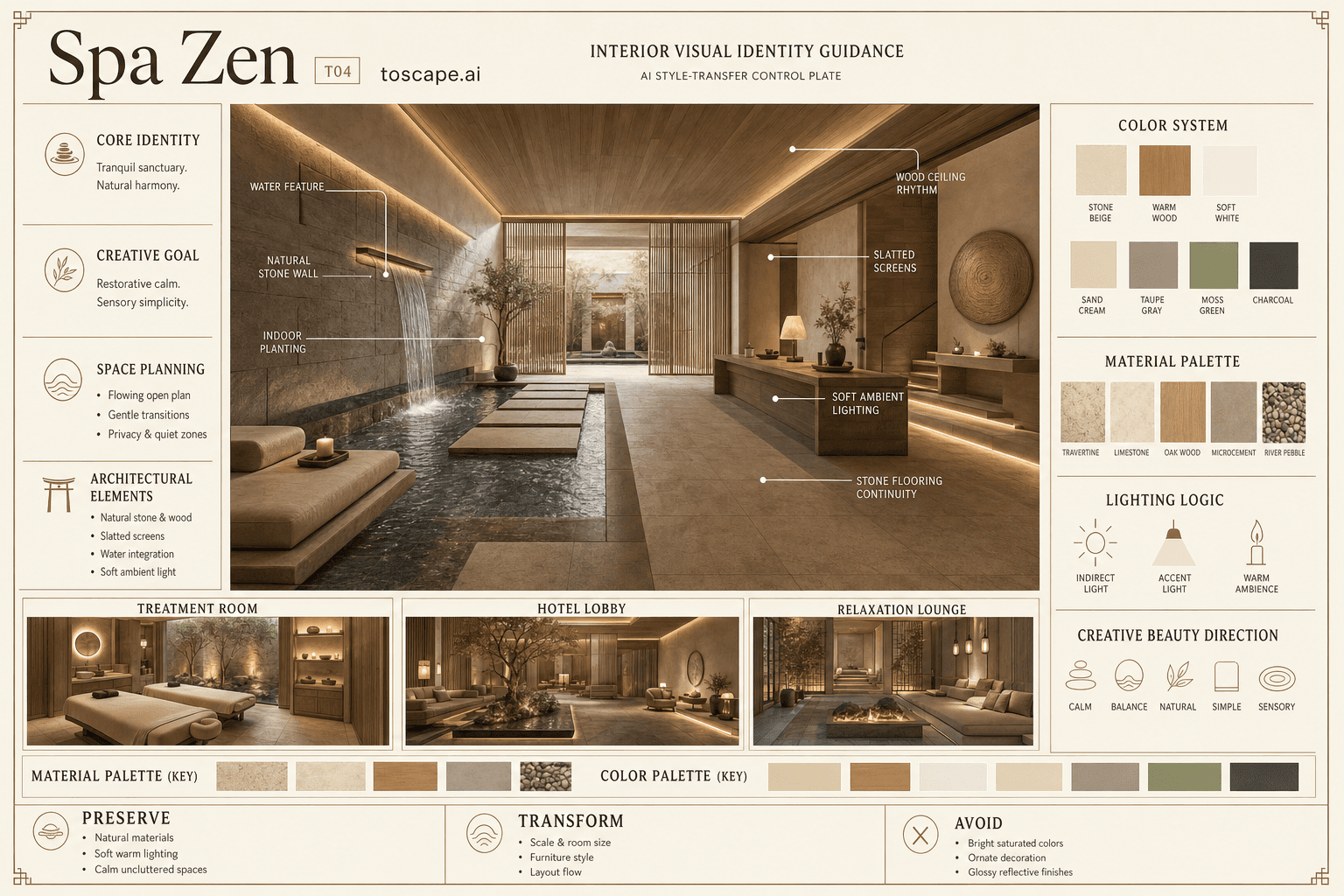
Spa Zen is an interior design style defined by A serene, balanced interior style driven by natural materials, tranquil minimalism, organic form, and the contemplative sensibility of high-end Asian-inspired spa experiences. To provide a tranquil sensory retreat that calms the mind and body through tactile, visual, and atmospheric serenity.
Visual DNA
Spatial Feeling
Tranquil, cocooned, meditative, and gently immersive; a refuge from sensory overload.
Form Language
Simple geometry blended with gentle curves and softened edges; low, horizontal planes; organic lines; pocketed or flowing forms; visual rhythm through repetition and alignment. Intimate to open proportions-never monumental, always...
Composition
Open, breathable plans with spaces either flowing or gently filtered by low screens, planting elements, or organic partitions; minimal circulation barriers. Sculptural bathtub, water feature, stone or wood wall, softly illuminated art...
Interior Elements
Natural stone cladding, light microcement or lime plaster, wood paneling, slatted screens, smooth render, and occasional raw concrete if softened with organic elements. Ceilings are quiet and planar; may feature recessed edge lighting,...
Color System
Layered beiges, sand, natural wood, pale stone, creamy white, and soft plant green. Calm, low-contrast palette with warm undertone; all colors must support a peaceful, immersive feeling where nothing visually dominates. Use controlled...
Material Palette
Matte, tactile, gently textured, soft to the hand; surfaces emphasize the natural variation of materials, not synthetic perfection. Stone on main floors/walls, wood on accent walls and ceilings or screens, plaster for quiet envelope,...
Lighting Logic
Cove lighting, concealed LED, soft up/downlights, and warm integrated strip lights-avoid exposed bulbs and ceiling grid spots. Layer dappled natural light, gentle cove wash, and selective sculptural accent to evoke organic...
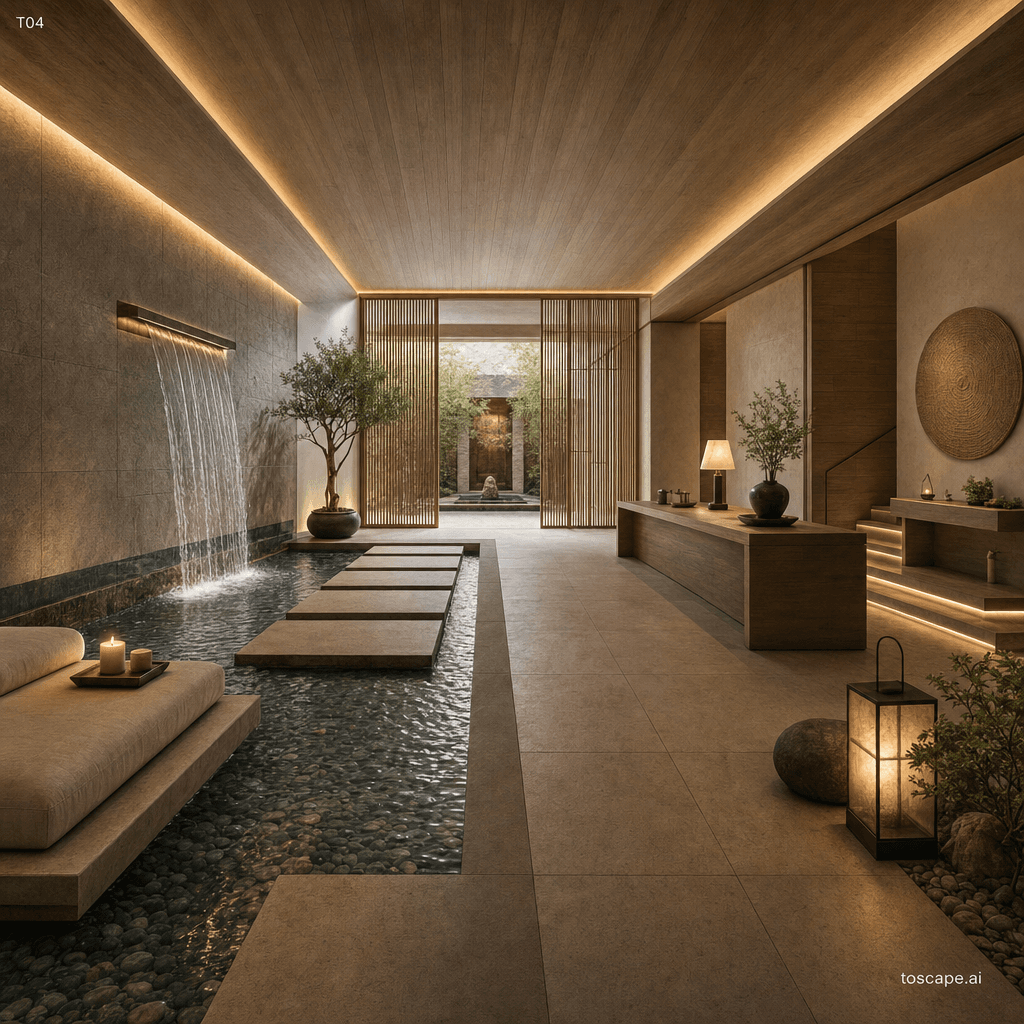
Interior reference image
Spa Zen composition, material palette, furniture language, and lighting direction.
Context Snapshot
This style draws inspiration from Japanese Zen aesthetics, modern spa architecture, and high-end resort wellness retreats,... Common in spa lounges, wellness centers, luxury hotel suites, hydrotherapy areas, yoga studios, and residential spaces seeking restorative simplicity. Pair elemental finishes (stone, wood, linen, water) with spatial restraint, biophilic cues, sculptural bathware, and filtered natural light-editing all that is unnecessary.
Composition And Planning
Open, breathable plans with spaces either flowing or gently filtered by low screens, planting elements, or organic partitions; minimal circulation barriers. Meandering, slow, and contemplative-movement is guided softly, not forced; entries are subtle, not ceremonial. Eye-level or slightly overhead, framing an axial view with lush foreground texture (plant, towel, tub, wood), soft light, and a tranquil central feature; avoid visual clutter edges.
Furniture Grammar
Low-profile, lightly rounded, rectilinear or pebble-shaped; organic edges and soft volumes are preferred. Arranged with generous breathing room, alignment to architectural elements or symmetrical axes where needed; seating often faces toward a meditative view, water element, or tranquil centerpiece. - Stone or terrazzo soaking tub - Floating wood bench or chaise - Minimalist paper/woven lantern chair
Creative Direction
A meditative sanctuary layered with matte stone, smooth wood, soft water reflections, sculptural tub, filtered daylight, and restrained, handcrafted objects. Serene photographic composition with layered negative space, tactile detail close-ups, a single dominant organic feature (bathtub, water, bonsai), and magazine-worthy warm color balance. Golden hour or candlelit mood, deep shadows, glowing cove light, water reflection, vapor, and rich tactile sense-camera lingers on sensory material. - Real materials with visible grain/variation - Custom joinery and sculptural bathware - Designer lighting, hand-finished accents - Artful negative...
Best Project Applications
- Luxury spa suites, resort bathrooms, wellness centers, meditation rooms, calming bedrooms.
Preserve, Transform, Avoid
Preserve
- Authentic natural materials, especially stone and wood
- Generous negative space and visual calm
- Warm, soft lighting and tactile shadows
- Minimal, curated furniture and accessories
Transform
- Add sculptural or pebble-shaped bathware for iconic focus
- Carefully layer soft biophilic planting and water features
- Introduce subtle art or calligraphy only if serene and balanced
- Increase texture contrast through grain and roughness-never color or gloss
Avoid
- Bright, saturated, or synthetic colors
- Glossy surfaces, high-shine marble, or gold/brass excess
- Busy wall art, graphic pattern, or cluttered decor
- Cold, overhead hospital lighting
- High-tech, modular, or corporate commercial furniture
Use this style in Toscape
Explore Spa Zen inside Toscape using interior-focused rendering workflows and gallery references.
Open interior references