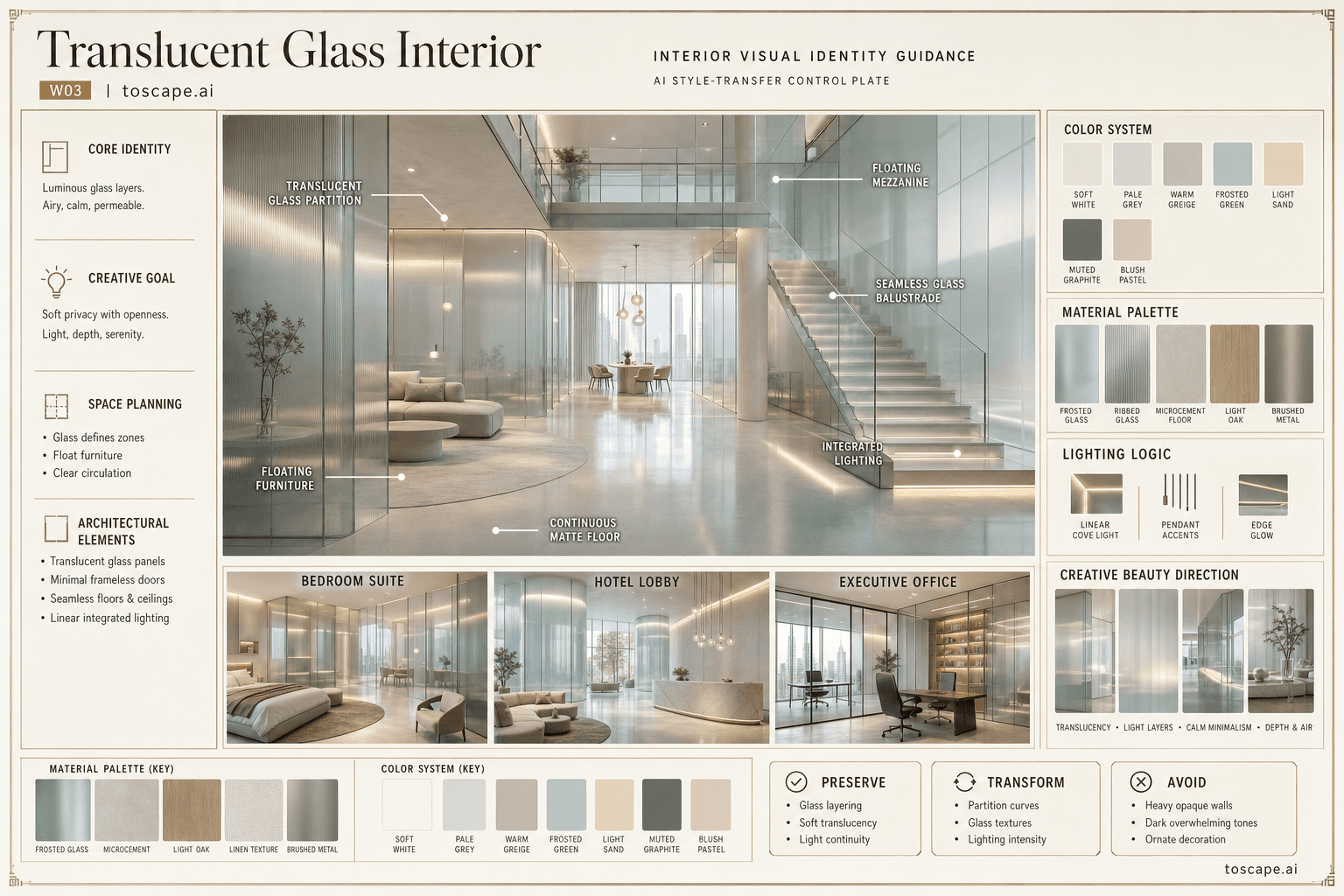
Translucent Glass Interior
W03 / Futuristic Minimal / Contemporary / Soft Tech / Architectural Modernism
A luminous, layered interior defined by translucent glass partitions, minimal floating furniture, and calm glowing light.
Overview
Translucent Glass Interior is an interior design style defined by A luminous, ethereal, and spatially layered interior defined by translucent glass partitions, glowing daylight, and seamless integration of reflective and matte surfaces. To achieve emotional calm, electrified airiness, and privacy with a sense of permeability-elevating both spatial drama and daily usability through glass.
Visual DNA
Spatial Feeling
Airy, floating, and softly luminous-rooms feel spatially expanded and visually layered, with veils of glass drifting between user and envelope.
Form Language
Clean rectilinear or subtle curved panels, frameless or ultra-minimal framing, softened edges, seamless junctions, and disciplined geometry. Generous ceiling heights and wall planes are favored, but intimacy is preserved by partial...
Composition
Open-plan or semi-open, but never chaotic; spatial boundaries are composed through staggered glass and light rather than traditional walls. The strongest focal points are usually compositions of glass partitions/doors, a hero piece of...
Interior Elements
Structural walls are neutral-painted or plastered in soft white, warm grey, or greige; main surface interest is driven by the varied texture and finish of the glass partitions. Not a decorative driver in this style; use a flat or...
Color System
Soft white, pale greige, frosted glass, cool grey floors, sand textiles, and gentle graphite anchors. Maintain tonal unity with minor highlights; glass itself should never be colored garishly-if colored, tints are desaturated and...
Material Palette
Glass is dominant: smooth, cool to the touch, varying from velvety matte to ghostlike glossy. Overall textures are gentle, non-tactile, and evoke serene touch. Translucent glass is for interior partitions, doors, and feature dividers;...
Lighting Logic
Soft linear coves, recessed ceiling lights, and flush-integrated LEDs; light is revealed indirectly and works in harmony with glass. Use strong contrasts between flooded daylight and semi-lit glass; introduce deep shadows and glowing...
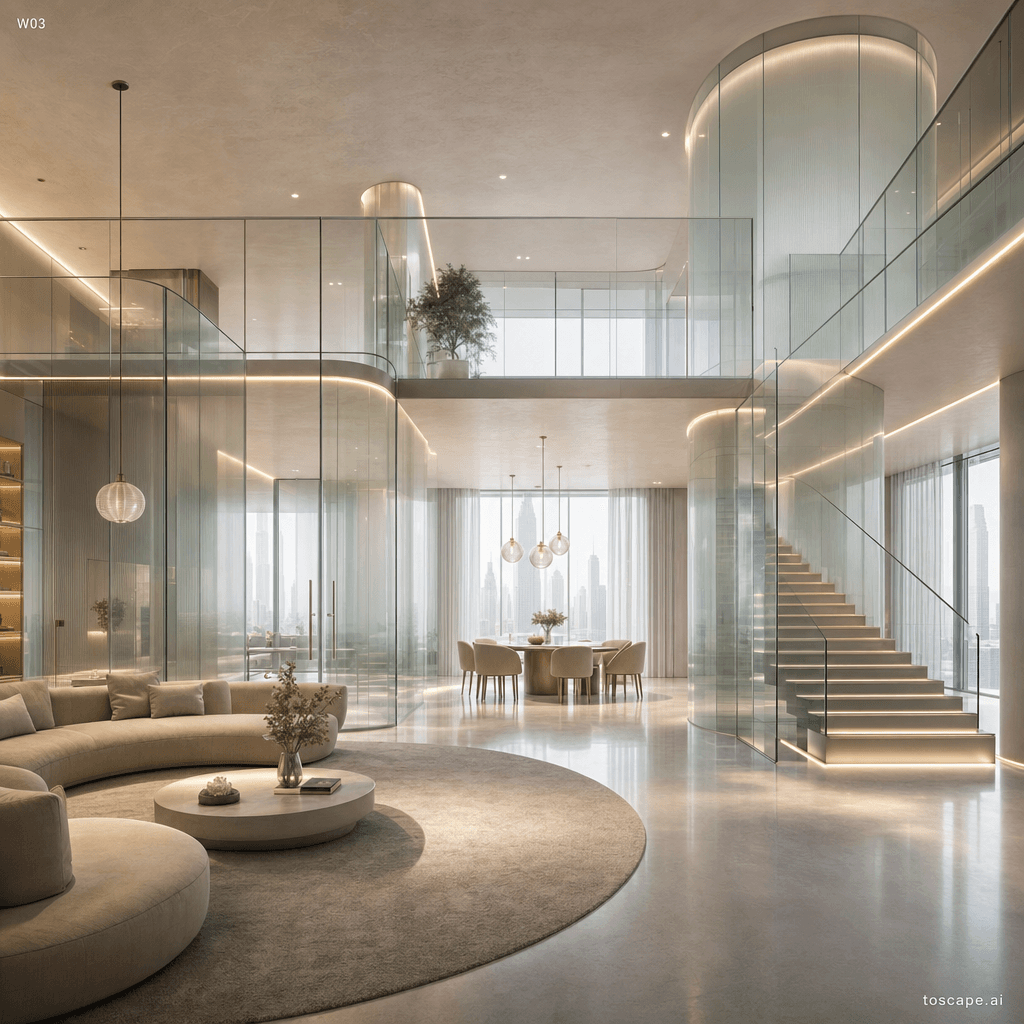
Interior reference image
Translucent Glass Interior composition, material palette, furniture language, and lighting direction.
Context Snapshot
Rooted in late-20th-century and 21st-century architectural experimentation, with influences from modernist glass pavilions,... Widely used as a signature element in premium apartments, open-plan offices, spas, modern villas, boutique retail, and hospitality flagships seeking light-driven visual dynamism. Bring translucency to walls, partitions, and room dividers, balancing privacy and permeability; combine seamless glass with sculptural furniture and warm base layers to avoid clinical coldness.
Composition And Planning
Open-plan or semi-open, but never chaotic; spatial boundaries are composed through staggered glass and light rather than traditional walls. Circulation encourages discovery and lateral movement, subtly guided by transparent boundaries and changes in light intensity. Best achieved with an oblique view that reads through multiple glass layers, foregrounding one glass screen and leading the eye through to a light-washed rear zone; include strong midground and softly blurred background.
Furniture Grammar
Minimal, sculptural, low-profile, and rounded or elegantly rectilinear; never ornate. Maintain airy spacing; seating should not block glass layers and must allow visual corridors across zones. - Low modular sofa in soft neutral textile - Sculptural glass-topped coffee table - Floating pale wood bench - Minimal upholstered lounge chair
Creative Direction
A glowing, weightless living space with rhythmic translucent glass panels casting diffused sunlight, floating seating in soft white boucle, and pale microcement floors reflecting atmospheric serenity. A visually arresting composition with glass layered diagonally, soft shadows, a single sculptural hero chair, minimal art, and at least one blurred silhouette beyond-the mood is contemplative, bright, and cinematic. Strong pools of daylight broken by glass veils, with dramatic edge-glow, deep but feathered shadows, and ethereal backlit halos-emphasizing the interplay of clarity and mystery. - Flawless custom glass detailing and joinery -...
Best Project Applications
- Premium living rooms, art galleries, spa suites, signature offices, boutique lobbies.
Preserve, Transform, Avoid
Preserve
- Layered translucent glass as space-defining element
- Soft luminous daylight or glowing artificial light
- Minimal, floating, sculptural furniture
- Calm, tonal, and neutral material palette
Transform
- Experiment with gentle glass curvature or color tinting for visual intrigue
- Calibrate light intensity or shadow for cinematic beauty
- Blend with subtle natural wood for project warmth
- Integrate technical lighting for sculptural highlighting of glass
Avoid
- Overwhelming transparency leading to visual chaos
- Hard, cold, or sterile tech-office atmosphere
- Busy patterns, bright colors, or heavy ornamentation
- Industrial details (visible bolting, exposed ducts, raw steel framing)
- Excessively heavy or classic furniture
Use this style in Toscape
Explore Translucent Glass Interior inside Toscape using interior-focused rendering workflows and gallery references.
Open interior references