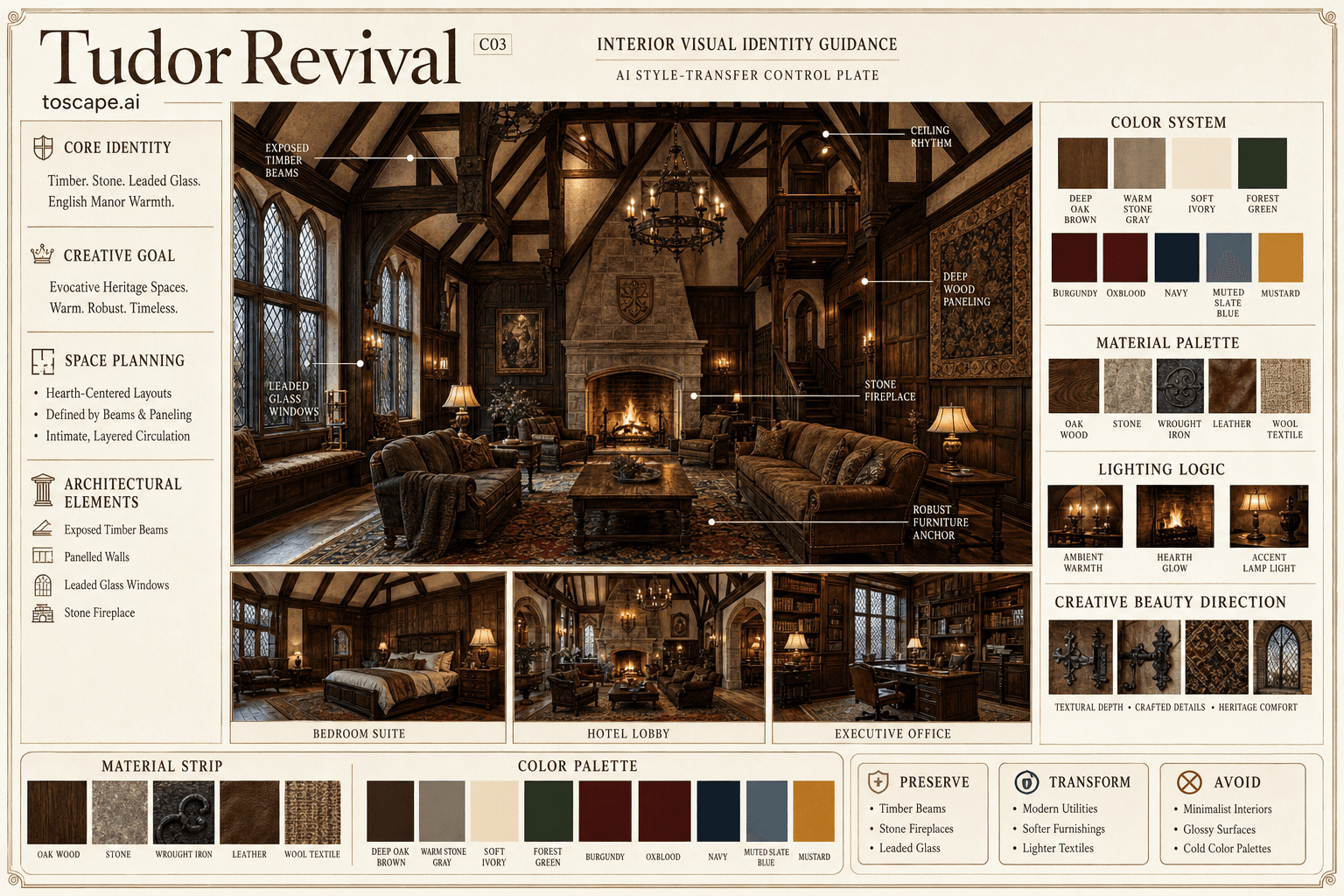
Tudor Revival
C03 / Heritage Historic / Modern Classic / Rustic Luxury / English Country House
A richly atmospheric English manor interior defined by heavy timber beams, paneled walls, commanding stone hearth, leaded windows, and deep, moody...
Overview
Tudor Revival is an interior design style defined by A richly atmospheric interior identity defined by timber-beamed ceilings, paneled walls, leaded glass, deep natural materials, and a sense of English manor comfort and formality. To evoke a nostalgic, enveloping, and stately sense of tradition through celebratory craftsmanship, robust materiality, and spatial warmth.
Visual DNA
Spatial Feeling
Enveloping, historic, textural, robustly warm, and richly atmospheric with a sense of grounded formality.
Form Language
Hefty, angular timber beams; rectilinear paneled walls; arched or broad stone fireplaces; diamond-paned windows; sturdy, carved furniture silhouettes. Medium to large rooms with solid, cozy enclosure; moderate ceiling heights made...
Composition
Room-based planning, emphasizing cozy enclosures, fireplace-focused groupings, and the natural rhythm of exposed beams/trusses. Large fireplace with stone or brick surround, timber-framed windows, rich paneling, or an elaborately beamed...
Interior Elements
Timber paneling (wainscot or full height), white/cream or muted plaster between beams, subtle tapestry or textile inserts, deep window reveals. Exposed timber beams, trusses, or rafters define the character-layout may be flat, coved, or...
Color System
Deep brown timber, warm golden cream plaster, aged stone, rich burgundy velvet, dark green leather, black iron accents, layered tapestry. Base neutrals are anchored by natural timber and stone; deep jewel-toned textiles and accessories...
Material Palette
Heavy, tactile, raw or waxed wood; coarse stone; plush textiles; textured metal; layered surfaces; deep pile rugs. Timber dominates overhead and up walls; stone focuses on hearths and some floors; textiles are layered on seating,...
Lighting Logic
Warm, low, and atmospheric; wall sconces, wrought iron lanterns, integrated picture lights; avoid overhead modern downlights. Emphasize directional contrast between firelight, sconce glow, and deep shadows for a rich, moody scene. Light...
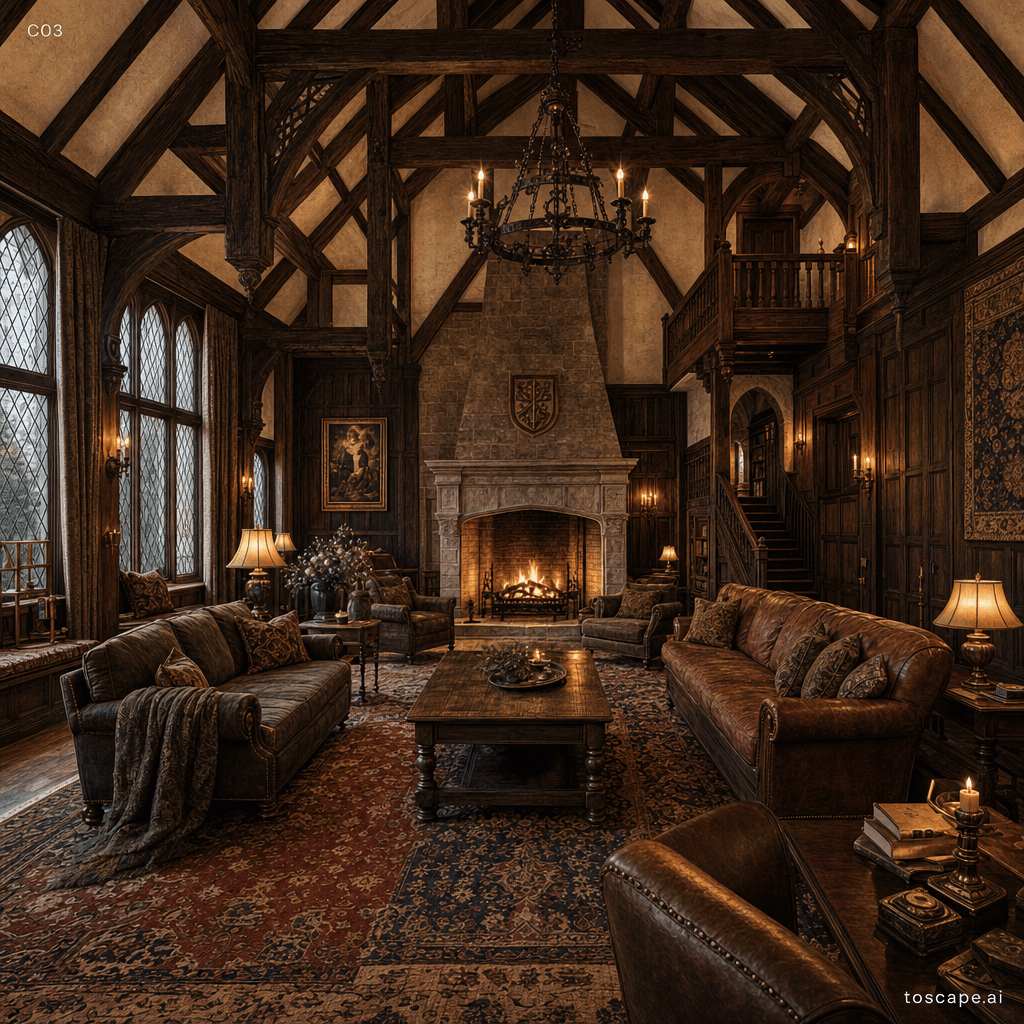
Interior reference image
Tudor Revival composition, material palette, furniture language, and lighting direction.
Context Snapshot
Originating in the late 19th and early 20th centuries, Tudor Revival reinterprets 16th-century English architecture for modern... Selectively used in luxury homes, boutique hotels, heritage restaurants, and curated library lounges aiming for a storied, immersive, and crafted aura. Refine and edit clutter, but preserve timber beams, authentic paneling, dramatic hearths, and rich textures; add contemporary comfort through controlled furniture and lighting.
Composition And Planning
Room-based planning, emphasizing cozy enclosures, fireplace-focused groupings, and the natural rhythm of exposed beams/trusses. Circulates around the hearth or central seating area, with a slow, processional quality; movement is intimate, never corridor-like. Best with a medium-low camera highlighting ceiling beams, focused on the hearth, with foreground textiles or paneling, midground seating, and deep background windows or built-ins.
Furniture Grammar
Robust, rectilinear, often with turned or carved legs, high backs, and solid forms. Center groupings near the hearth or under the dominant beam; use axial or soft-symmetrical logic; allow for walkways but never float all pieces-anchor with rugs. - Oak refectory dining table - High-back carved armchair - Velvet window seat - Panel-fronted storage cabinet
Creative Direction
A dramatic, warmly lit manor lounge or library anchored by a monumental stone fireplace, richly beamed timber ceiling, deep oak paneling, subtle leaded glass, heavy velvet, and curated antique accents in fire-lit glow. Spaces feel storied and intentional-fewer, richer accessories; layered rugs and textiles; impeccable joinery and perfectly balanced shadow; one or two visually powerful architectural details drive the scene. Evening ambiance with dynamic interplay of fire and candlelight, bold shadows from beams and paneling, lush textiles catching warm highlights, and depth emphasized by glowing leaded windows. - Real, substantial oak...
Best Project Applications
- Heritage home salons, boutique hotel lounges, cozy libraries, grand dining rooms, storybook bedrooms.
Preserve, Transform, Avoid
Preserve
- Structural or visually dominant timber beams on ceilings and walls.
- Authentic, textural paneling and robust stone/brick fireplace.
- Leaded multi-pane windows with historic iron or wooden hardware.
- Substantial, carved, historically inspired furniture.
Transform
- Update comfort and textiles in period-appropriate colorways.
- Re-interpret layout for modern living while maintaining fireplace axis.
- Integrate subtle, controlled modern lighting that enhances texture and shadow.
- Use curated, premium art and objects instead of cluttered bric-a-brac.
Avoid
- White drywall ceilings and flat "modernized" wall planes.
- Minimalist, industrial, or chrome furniture.
- Excessive lightness or absence of timber structure.
- Pastel palettes and synthetic brights.
- Open-plan spaces with no sense of enclosure.
Use this style in Toscape
Explore Tudor Revival inside Toscape using interior-focused rendering workflows and gallery references.
Open interior references