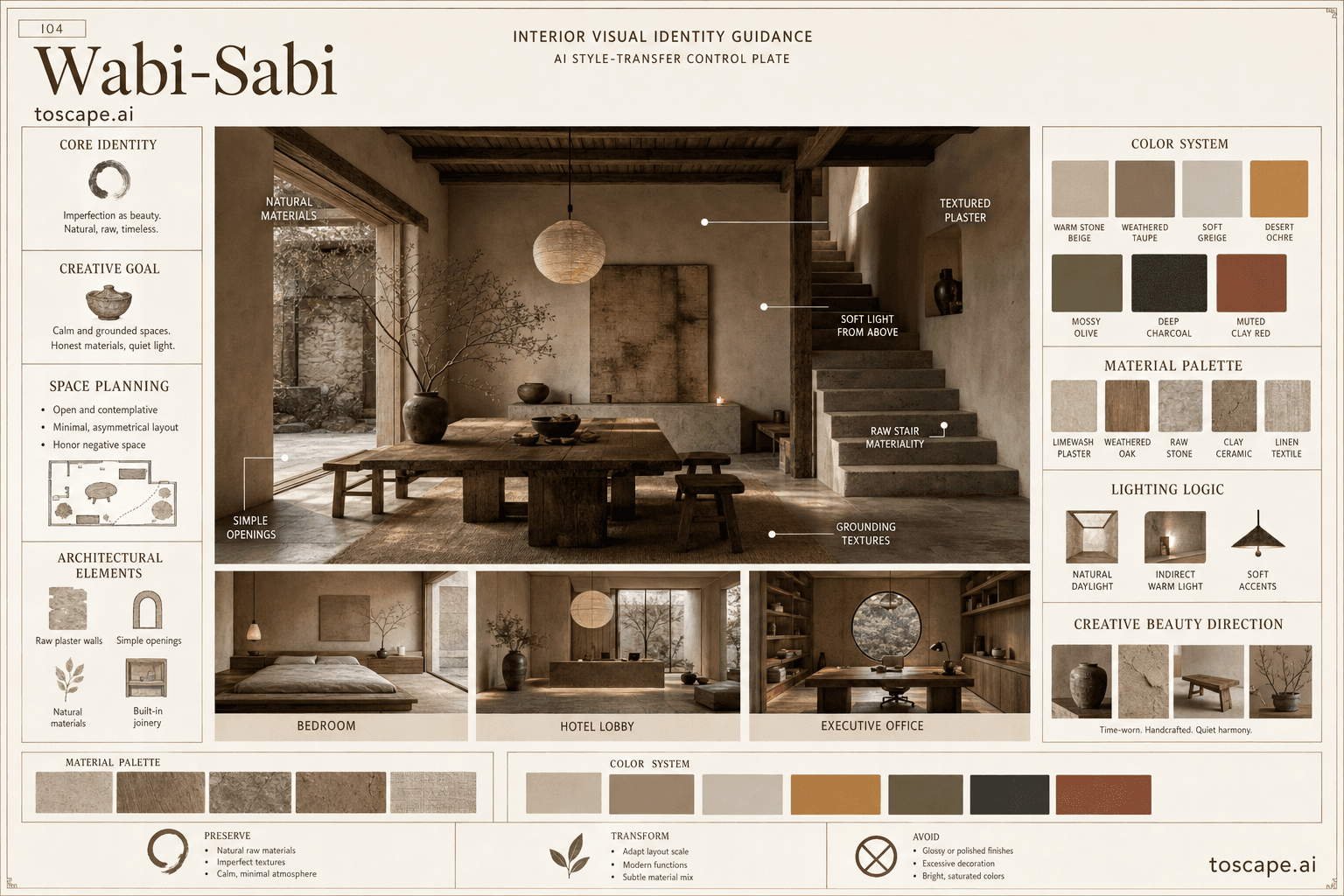
Wabi-Sabi
I04 / Organic Minimal / Japanese Contemporary / Textural Calm / Modern Rustic
A poetic, organic Japanese-inspired style built around imperfect beauty, raw textures, authentic materiality, and profound calm.
Overview
Wabi-Sabi is an interior design style defined by A serene, understated, organic interior style defined by natural materials, irregular textures, weathered finishes, muted tones, and compositional imperfection that elevates subtle beauty. To evoke calm, authentic beauty by embracing the incomplete, the humble, and the quiet poetry of everyday use and natural transience.
Visual DNA
Spatial Feeling
Calm, earthy, meditative, grounded, and quiet.
Form Language
Simple, primitive, and tactile forms: irregular lines, organic curves, blocky solids, elemental geometry, and hand-built asymmetry. Low, grounded, intimate; gracefully open with selective compression, avoiding monumentality or excessive...
Composition
Loosely organized, open, and contemplative; rooms feel sparse but intentional, with space for emptiness and single, grounding elements. One key object, raw wall, or window view anchors the room, while everything else quietly recedes....
Interior Elements
Hand-applied plaster, raw clay, weathered stone, limewash, unfinished timber, or clay-based paint with subtle surface variation. Ceilings are plain, raw, or clad in pale timber or textured plaster; no decorative features, beams only if...
Color System
A spectrum from pale sand, raw bone, driftwood, moss, and stone, with smudged pigment and cloudy undertones. Use a gentle progression of closely related earth tones, never strong contrast; allow natural patina and fading to define the...
Material Palette
Tactile, organic, visibly hand-worked, rough and smooth interplay, soft patina, subtle micro-relief, no synthetic shine. Walls and ceilings: clay plaster, limewash; flooring: worn timber or stone; furniture: solid, imperfectly finished...
Lighting Logic
Subdued and indirect; wall washers, low-shaded floor lamps, hidden LED coves behind architectural forms. Flood the scene with low, raking warm natural light, emphasizing subtle shadow patterns and raw texture without drama-let dusk and...
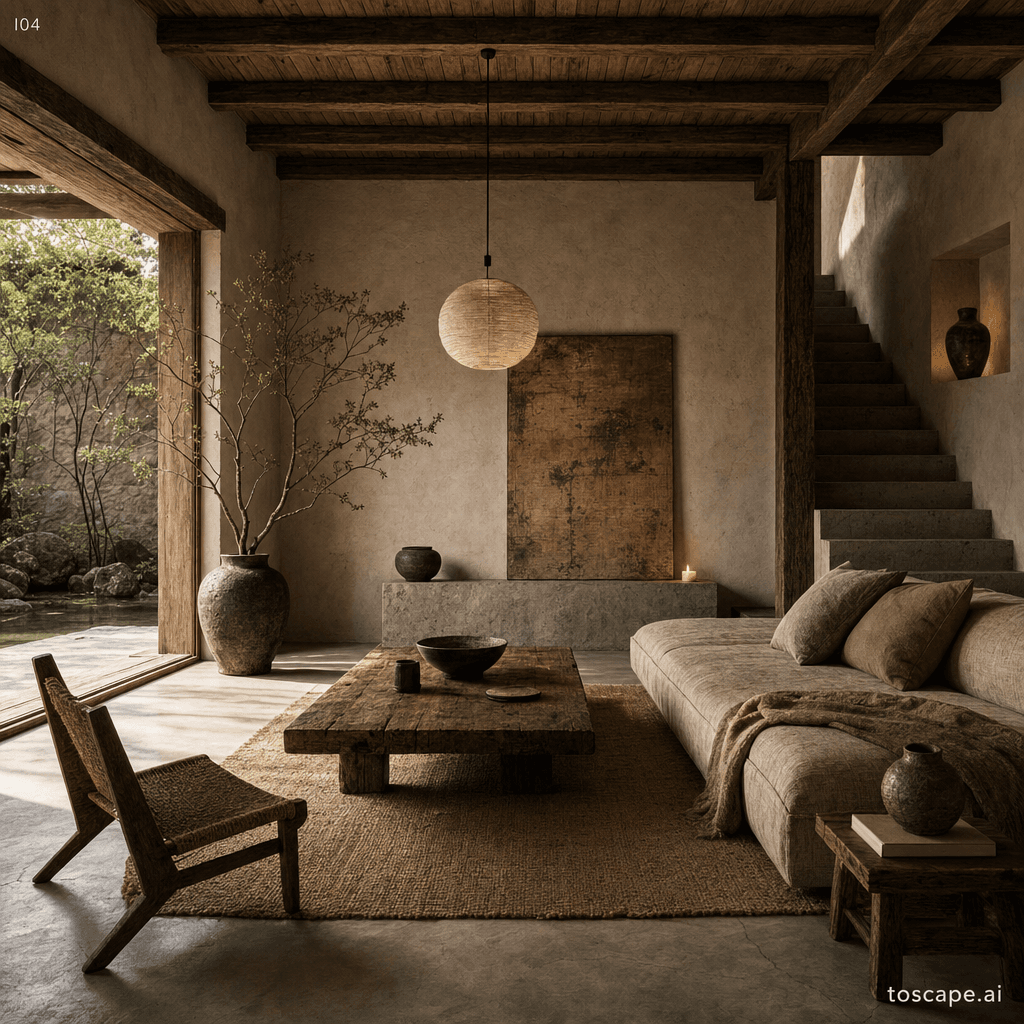
Interior reference image
Wabi-Sabi composition, material palette, furniture language, and lighting direction.
Context Snapshot
Inspired by Japanese aesthetics, Zen philosophy, and traditional tea rooms, Wabi-Sabi honors impermanence, transience, and the... Applied in bespoke residential spaces, luxury spas, art-driven hotels, boutique wellness studios, and creative apartments seeking calm and authenticity. Curate rough, hand-applied finishes, honest timber, stone, ceramic, and layered textures with elegant restraint; edit for emptiness and soft light, avoiding design excess.
Composition And Planning
Loosely organized, open, and contemplative; rooms feel sparse but intentional, with space for emptiness and single, grounding elements. The eye and body drift softly-movement is slow, guided by subtle texture, light, or a quiet focal object rather than a visual axis. Use mid-low camera height, oblique or subtly off-centered views, allowing negative space, focused textural detail, and a soft background, never harsh or centering.
Furniture Grammar
Primitive, low-slung, blocky, organic, and honest; handmade or visibly imperfect. Floating or wall-adjacent placement, each piece given breathing room, slight purposeful misalignment is welcome; avoid crowding or regular grids. - Low weathered timber coffee table - Hand-built stone bench - Large organic ceramic stool - Deep linen lounge cushion
Creative Direction
A poetic room bathed in soft evening light: pale clay walls full of texture, weathered timber floors, rough linen lounge cushions, a single wild branch in an unglazed ceramic vase, each piece separated by patient emptiness. Editorial close-ups of hand-worked walls, imperfect timber, and sparse curated decor; space feels collected, tactile, and deeply quiet, with every object both solitary and essential. Low sun grazes across timeworn plaster and rough timber, throwing gentle shadows and accentuating texture, a solitary tea table in view-a mood of transcendent silence. - Authentic raw timbers and deeply worked hand-finished plaster -...
Best Project Applications
- Luxury residences, intimate wellness spaces, boutique hotels, creative studios.
Preserve, Transform, Avoid
Preserve
- Embrace visible natural imperfection and patina.
- Use honest, tactile raw materials-timber, plaster, clay, stone.
- Maintain poetic negative space and considered emptiness.
- Favor hand-worked, asymmetrical forms and ancient atmosphere.
Transform
- Refine furniture lines with artisanal minimalism (never lose touch of handmade roughness).
- Allow controlled contemporary joinery if all materials remain pure and unadorned.
- Lighten the palette for mood, never for sterile effect.
- Integrate select natural light techniques to enhance beauty, not erase imperfection.
Avoid
- Synthetically perfect surfaces, finishes, or furniture.
- Busy decor, pattern overload, maximalist art, or intrusive color.
- Corporate, glossy, or modern hotel minimalism.
- Plastic, chrome, acrylic, or high-gloss metals.
- Bright white walls, recessed lighting grids, or generic apartment layouts.
Use this style in Toscape
Explore Wabi-Sabi inside Toscape using interior-focused rendering workflows and gallery references.
Open interior references