Atlas Mountain Berber Vernacular
Morocco · Berber (Amazigh) vernacular architecture of the High Atlas, Middle Atlas, and An...
The high-mountain fortified earth architecture of the Amazigh people — tighremt (kasbah) and fortified granary (ighrem)
Overview
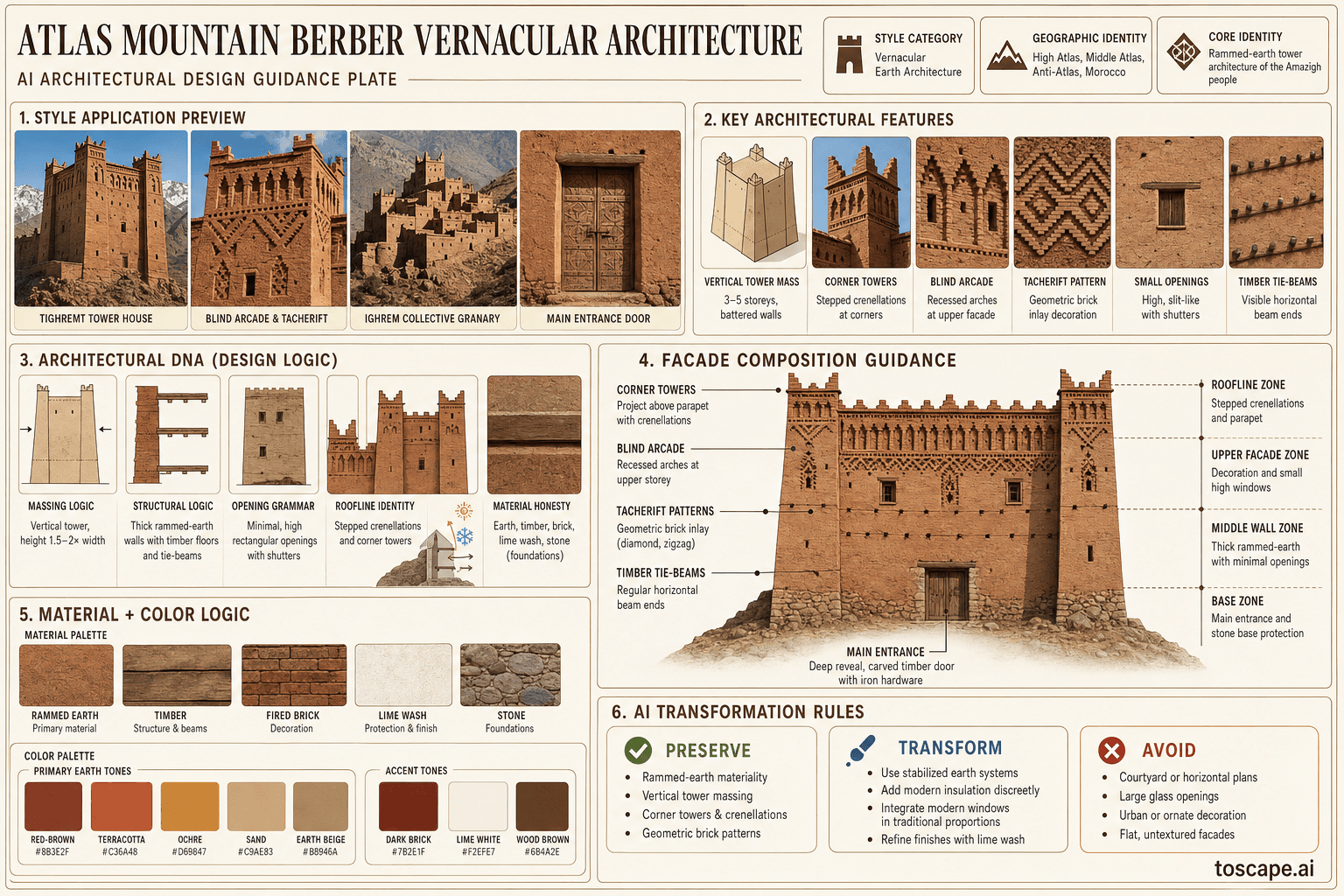
Atlas Mountain Berber Vernacular is a regional architectural identity in Morocco. Traditional Berber (Amazigh) vernacular architecture of the High Atlas, Middle Atlas, and Anti-Atlas mountain ranges — a distinct architectural culture that predates and exists alongside Arabo-Andalusian urban traditions. Monumental rammed-earth (pisé) construction — thick earth walls (600–1000 mm), reddish-brown in color — multi-storey tower-houses (tighremt) rising 3–5 storeys — corner towers with decorative crenel...
Visual DNA
Massing & Form
The Atlas Berber tighremt is a vertical, tower-like volume — fundamentally different from the horizontal, courtyard-centered urban dar. The building is a rectangular tower block, typically 8–12 m × 8–15 m in plan, rising 3–5 storeys (12–18 m in height) .
Facade Language
The tighremt facade is characterized by monumentality, verticality, and geometric abstraction: Battered walls: The walls taper inward as they rise (batter) — the base is substantially thicker than the top. This taper reads as a slight inward slope that gives the building a grounded, pyramid-like solidity.
Materials & Texture
The Atlas Berber palette is monochromatic and earth-based: Red-brown rammed earth — the dominant material, warm red-brown to ochre depending on local soil composition — the entire visual identity Timber (poplar, juniper, palm) — for floors, lintels, and the visible horizontal tie-beams — natural brown Fired brick — for...
Color Palette
White, cream, pale sand, warm timber, and shadow-driven dark metal accents define the palette. The facade should stay bright and climate-aware rather than heavy, gray, or over-saturated.
Ornament & Detail
Berber ornament is abstract, geometric, and symbolic: Blind arcade: The row of recessed brick arches — a rhythmic, architectural ornament Tacherift brick inlay: Zigzag, diamond, and chevron patterns in projecting brick — Berber protective symbols integrated into the facade Door carving: Simple geometric patterns on the...
Climate Response
The Atlas climate is severe: cold snowy winters (−5 to −15°C), hot summers (30–38°C), large diurnal range, strong winds, and steep terrain. The tighremt responds: Thermal mass of earth walls: The 600–1000 mm walls provide thermal lag of 8–12 hours — the interior stays warm through the cold night, cool through the hot d...
Landscape & Ground
Traditional Berber (Amazigh) vernacular architecture of the High Atlas, Middle Atlas, and Anti-Atlas mountain ranges — a distinct architectural culture that predates and exists alongside Arabo-Andalusian urban traditions. The Atlas climate is severe: cold snowy winters (−5 to −15°C), hot summers (30–38°C), large diurna...
Reference elevation
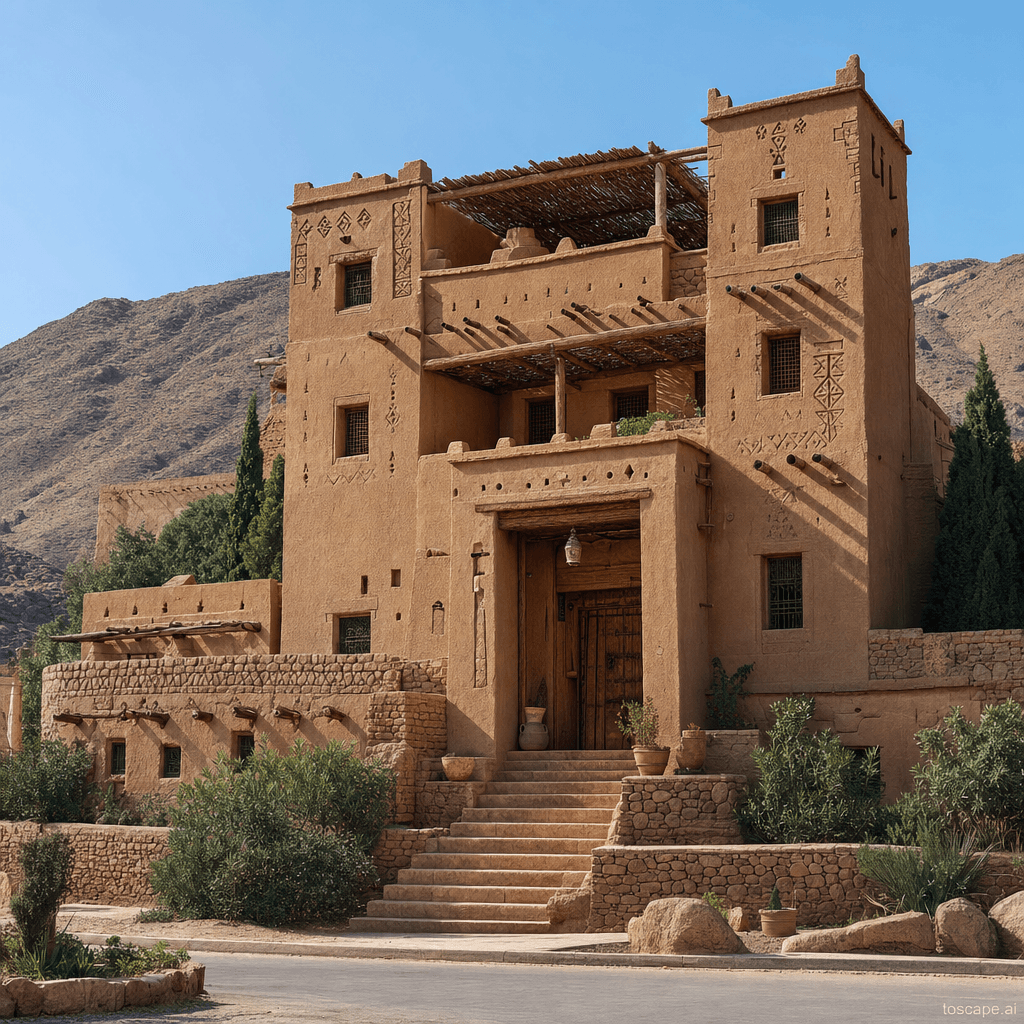
Atlas Mountain Berber Vernacular — characteristic facade composition, Berber (Amazigh) vernacular architecture of the High Atlas, Middle Atlas, and An....
Context Snapshot
Traditional Berber (Amazigh) vernacular architecture of the High Atlas, Middle Atlas, and Anti-Atlas mountain ranges — a distinct architectural culture that predates and exists alongside Arabo-Andalus... The Atlas climate is severe: cold snowy winters (−5 to −15°C), hot summers (30–38°C), large diurnal range, strong winds, and steep terrain.
Contemporary Relevance
Atlas Mountain Berber Vernacular is useful today for residential, hospitality, civic, and place-branding work that needs Morocco-specific character grounded in local massing, material tone, climate response, and settlement logic rather than generic international styling.
Use this style in Toscape
Explore Atlas Mountain Berber Vernacular directly inside Toscape using the Facade Re-Style and Design Options workflows.
Open Atlas Mountain Berber Vernacular in the gallery