Māori Marae
New Zealand · architectural identity of the Māori marae
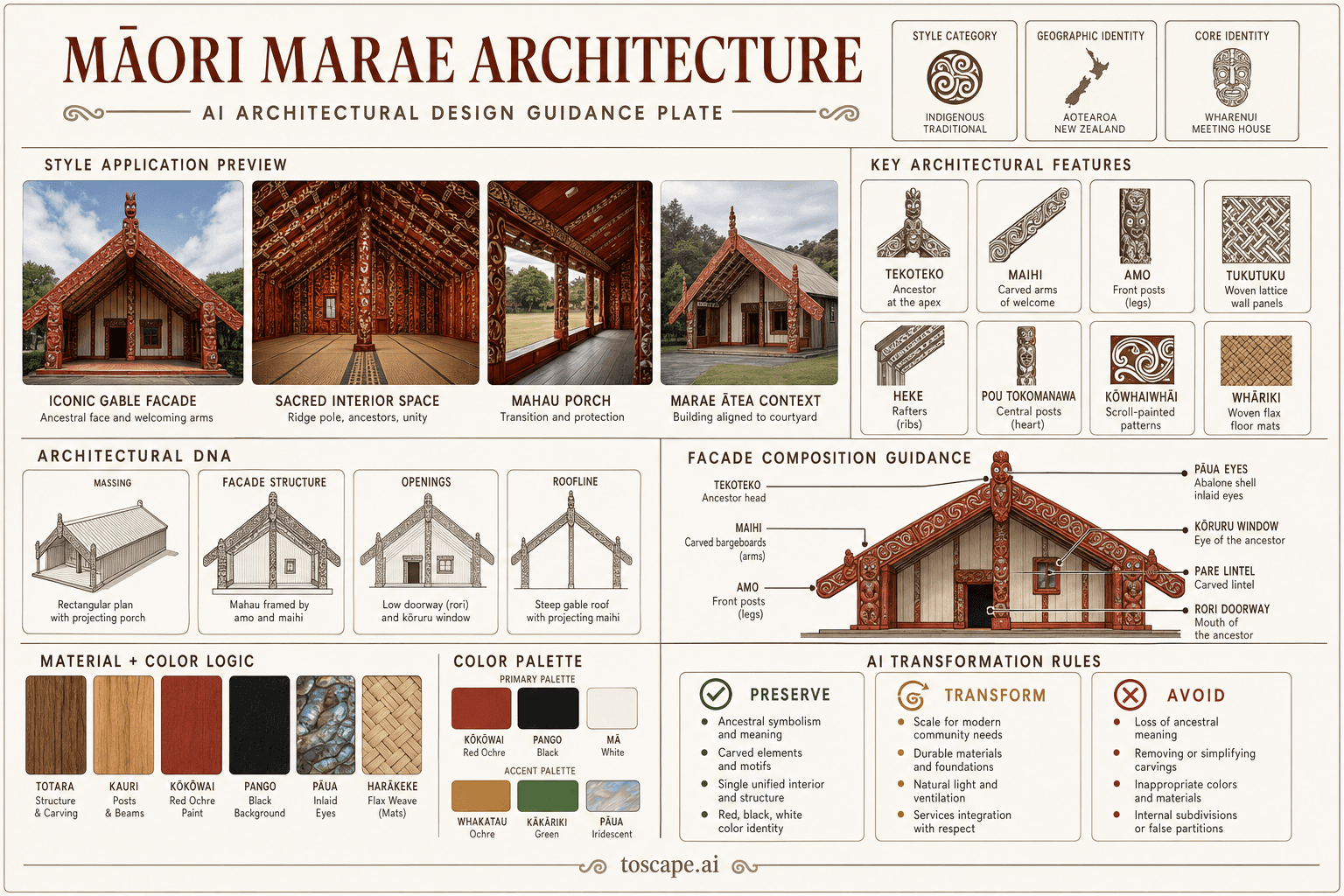
The wharenui (carved meeting house) of the Māori marae — the ancestral architecture of Aotearoa New Zealand where the building IS the ancestor, its ridge pole the spine, its rafter...
Overview
Māori Marae is a regional architectural identity in New Zealand. The architectural identity of the Māori marae — the wharenui (meeting house), the central structure of the marae ātea (ceremonial courtyard complex), a rectangular single-room timber building (10–30 m long × 6–10 m wide) representing the body of an important ancestor — the exterior is defined by the carved front porch (mahau), the bargeboards (maihi) extending as arms, and the tekoteko (carved figure) at the apex of...
Visual DNA
Massing & Form
The wharenui is a rectangular box with a steep gable roof (45–55° pitch). The proportions are horizontal — the building stretches along the marae ātea (open courtyard), with the gable end forming the primary facade.
Facade Language
The wharenui facade (the mahau — porch — and gable end) is the most elaborately decorated elevation in Polynesian architecture: (1) The tekoteko — the carved figure at the apex of the gable, representing the ancestor's face, with protruding tongue (whetero) and pāua (abalone) shell-inlaid eyes. (2) The maihi — the two...
Materials & Texture
The palette is traditional and natural: (1) Totara (Podocarpus totara) — the primary carving timber, a native conifer with straight grain, durability, and deep reddish-brown color — the sacred wood of Māori carving. (2) Kauri (Agathis australis) — a massive native conifer used for large structural timbers.
Color Palette
White, cream, pale sand, warm timber, and shadow-driven dark metal accents define the palette. The facade should stay bright and climate-aware rather than heavy, gray, or over-saturated.
Ornament & Detail
Māori ornament IS the architecture — every surface is carved, painted, or woven: (1) Whakairo — wood carving of figures and patterns: the spiral (pitau / koru — fern frond, symbol of new life), the manaia (profile figure with bird-like head), the tiki (human figure), rauponga (notched parallel ridges), pakati (dog-toot...
Climate Response
The marae is always sited in relation to the landscape: the wharenui faces the marae ātea (open courtyard), and the complex is positioned with reference to the ancestral mountain (maunga), river (awa), and coast. The steep roof sheds heavy rainfall (1,000–3,000 mm/year across much of Aotearoa).
Landscape & Ground
The architectural identity of the Māori marae — the wharenui (meeting house), the central structure of the marae ātea (ceremonial courtyard complex), a rectangular single-room timber building (10–30 m long × 6–10 m wide) representing the body of an important ancestor — the exterior is defined by the carved front porch...
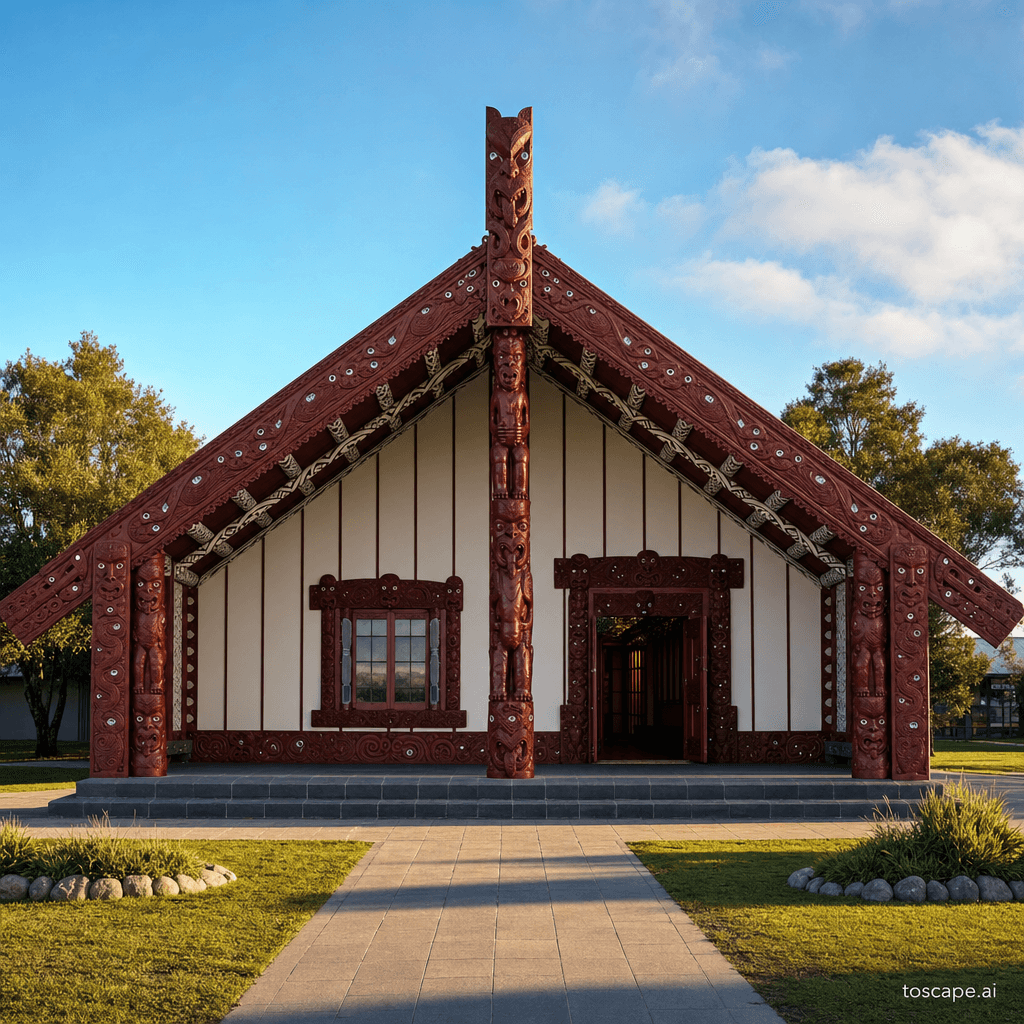
Reference elevation
Māori Marae — characteristic facade composition, architectural identity of the Māori marae.
Context Snapshot
The architectural identity of the Māori marae — the wharenui (meeting house), the central structure of the marae ātea (ceremonial courtyard complex), a rectangular single-room timber building (10–30 m... The marae is always sited in relation to the landscape: the wharenui faces the marae ātea (open courtyard), and the complex is positioned with reference to the ancestral mountain (maunga), river (awa), and coast.
Contemporary Relevance
Māori Marae is useful today for residential, hospitality, civic, and place-branding work that needs New Zealand-specific character grounded in local massing, material tone, climate response, and settlement logic rather than generic international styling.
Use this style in Toscape
Explore Māori Marae directly inside Toscape using the Facade Re-Style and Design Options workflows.
Open Māori Marae in the gallery