Okinawa Ryukyu
Japan · domestic architecture of Okinawa (Ryukyu Islands)
The subtropical island architecture of the Ryukyu Kingdom — red-tiled roofs, coral-stone walls, and typhoon-resistant design
Overview
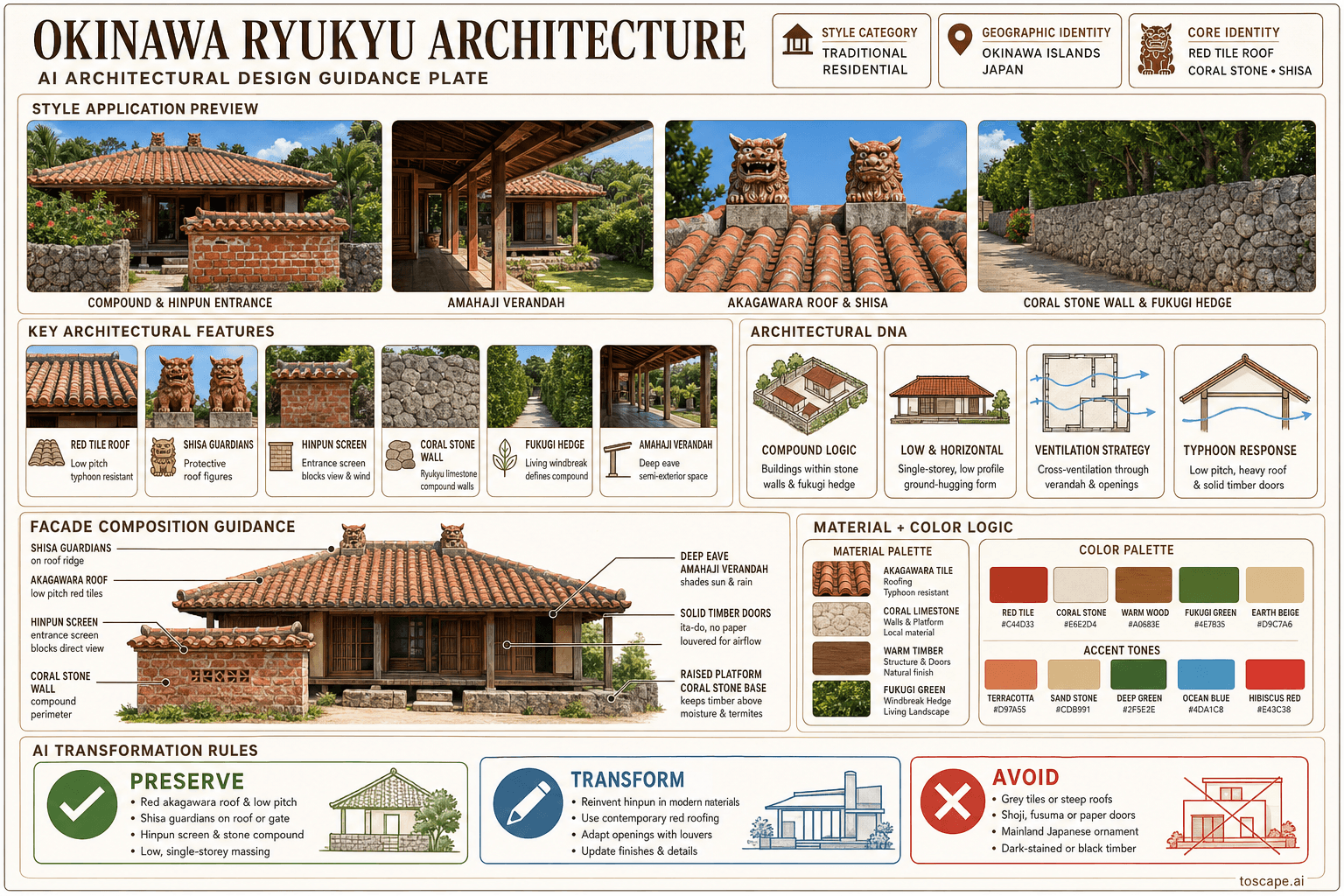
Okinawa Ryukyu is a regional architectural identity in Japan. Traditional domestic architecture of Okinawa (Ryukyu Islands) — a distinct architectural culture within Japan, shaped by the subtropical climate, the independent Ryukyu Kingdom's Chinese-influenced culture (pre-1879), and the constant threat of typhoons. Red-orange unglazed ceramic roof tiles (akagawara) — the defining Okinawan roof, entirely different from mainland Japanese grey-black kawara — shisa (lion-dog) ceram...
Visual DNA
Massing & Form
The Okinawan house is fundamentally different from any mainland Japanese typology — low, single-storey, arranged as a compound of separate or linked buildings rather than the integrated multi-room plan of the mainland. Plan — "Nuchija" (main house): The main residential building is a rectangular, single-storey volume —...
Facade Language
The Okinawan facade is characterized by horizontality and solidity: Red tile roof: The dominant visual element — the warm red-orange roof reads as a broad, low-pitched horizontal plane, often extending as a deep eave (approximately 1.0–1.5 m) over a verandah (amahaji). The red roof is the irreducible Okinawan visual si...
Materials & Texture
The Okinawan material palette is warmer and more Mediterranean-feeling than the cool greys and charcoals of mainland Japan: Red-orange akagawara tiles — the primary roof material Grey-white coral limestone — walls, platforms, compound walls Warm-brown timber — frame, doors, verandah — not dark-stained like the mainland...
Color Palette
White, cream, pale sand, warm timber, and shadow-driven dark metal accents define the palette. The facade should stay bright and climate-aware rather than heavy, gray, or over-saturated.
Ornament & Detail
Shisa guardians: The primary ornament — ceramic figures on the roof and gate. Shisa range from simple folk-art figures to elaborate sculptural pieces.
Climate Response
The Okinawan climate — subtropical, hot humid summers (30–35°C), mild winters (15–20°C), extreme typhoon risk (June–October), high humidity — drives a fundamentally different environmental strategy than mainland Japan: Typhoon resistance (primary driver): Low profile, low-pitch roof, heavy tile with thick mortar beddin...
Landscape & Ground
Traditional domestic architecture of Okinawa (Ryukyu Islands) — a distinct architectural culture within Japan, shaped by the subtropical climate, the independent Ryukyu Kingdom's Chinese-influenced culture (pre-1879), and the constant threat of typhoons. The Okinawan climate — subtropical, hot humid summers (30–35°C)...
Reference elevation
Okinawa Ryukyu — characteristic facade composition, domestic architecture of Okinawa (Ryukyu Islands).
Context Snapshot
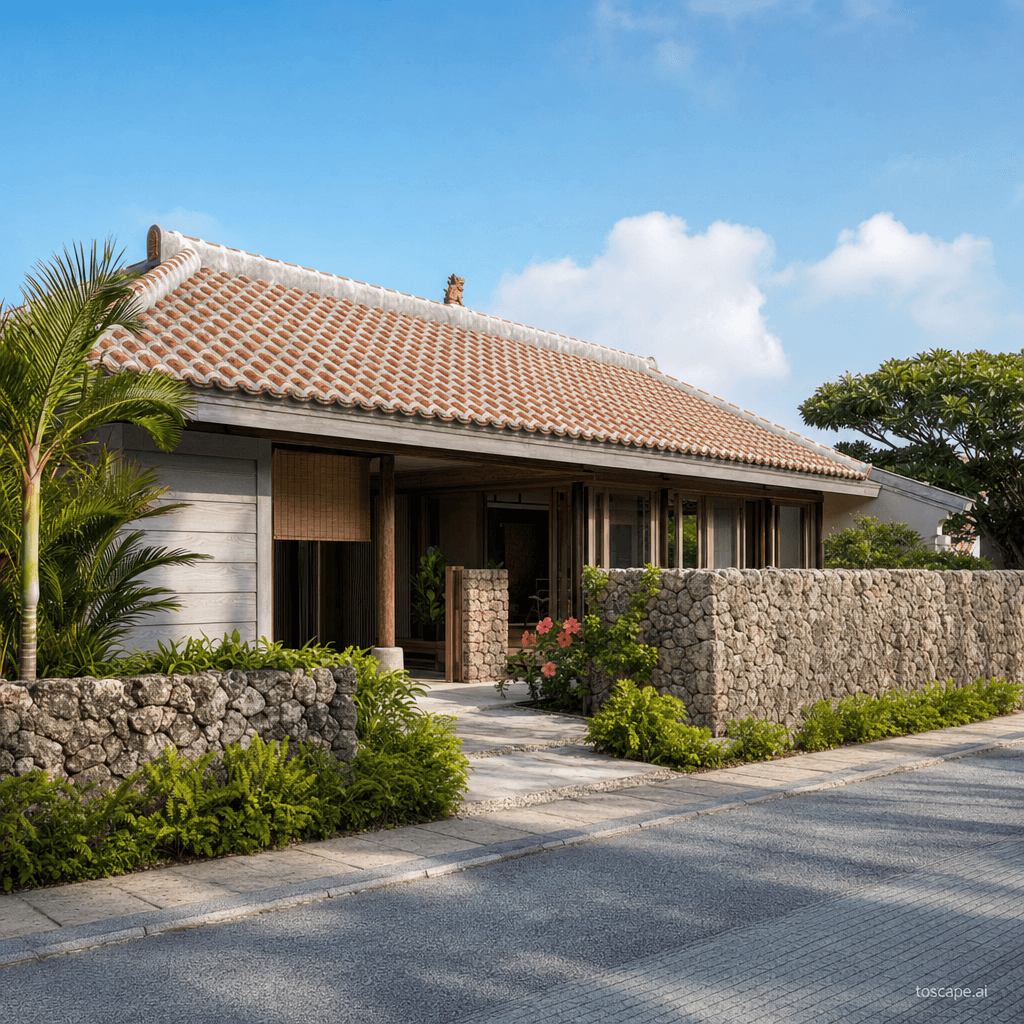
Traditional domestic architecture of Okinawa (Ryukyu Islands) — a distinct architectural culture within Japan, shaped by the subtropical climate, the independent Ryukyu Kingdom's Chinese-influenced cu... The Okinawan climate — subtropical, hot humid summers (30–35°C), mild winters (15–20°C), extreme typhoon risk (June–October), high humidity — drives a fundamentally different environmental strategy than mainland Japan: T...
Contemporary Relevance
Okinawa Ryukyu is useful today for residential, hospitality, civic, and place-branding work that needs Japan-specific character grounded in local massing, material tone, climate response, and settlement logic rather than generic international styling.
Use this style in Toscape
Explore Okinawa Ryukyu directly inside Toscape using the Facade Re-Style and Design Options workflows.
Open Okinawa Ryukyu in the gallery