Shirakawa-Go Gasshō-Zukuri Farmhouse
Japan · gasshō-zukuri (praying-hands construction) farmhouses of Shirakawa-go and Gokaya...
The monumental thatched-roof farmhouses of the Japanese Alps — the "praying hands" roof
Overview
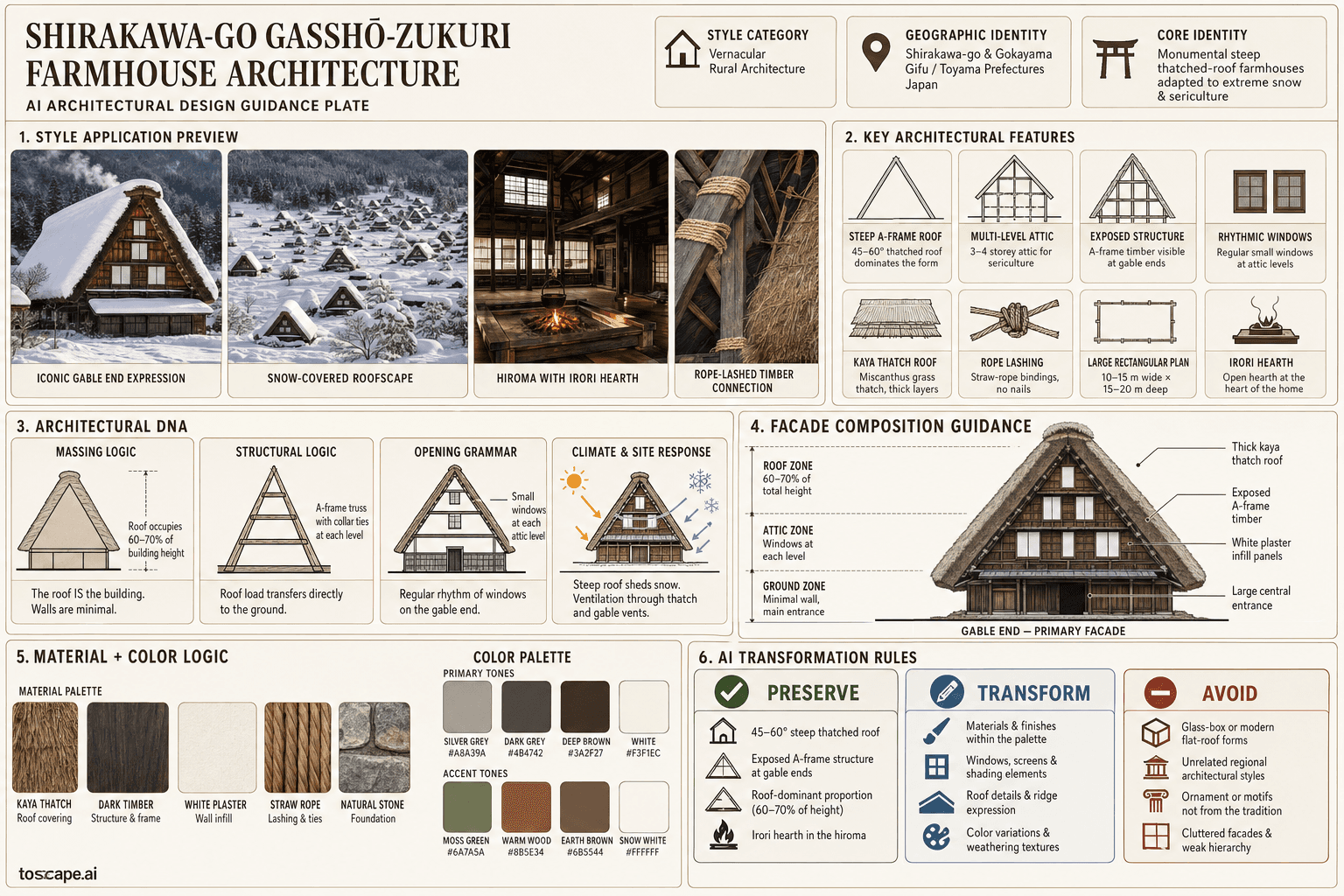
Shirakawa-Go Gasshō-Zukuri Farmhouse is a regional architectural identity in Japan. The gasshō-zukuri (praying-hands construction) farmhouses of Shirakawa-go and Gokayama, Gifu/Toyama Prefectures — Japan's most iconic vernacular rural architecture, a UNESCO World Heritage site (inscribed 1995) representing a unique adaptation to extreme snow conditions and sericulture. Monumental steep-pitched thatched roof (45–60°) — the gasshō ("praying hands") profile — one of the steepest domestic roofs in world...
Visual DNA
Massing & Form
The gasshō-zukuri farmhouse is defined by its roof — the most dominant roof in Japanese architecture: Roof proportion: The roof occupies approximately 60–70% of the total building height — the walls are visually minimal, the roof IS the building. Roof pitch: 45–60° — resembling hands pressed together in prayer (gasshō)...
Facade Language
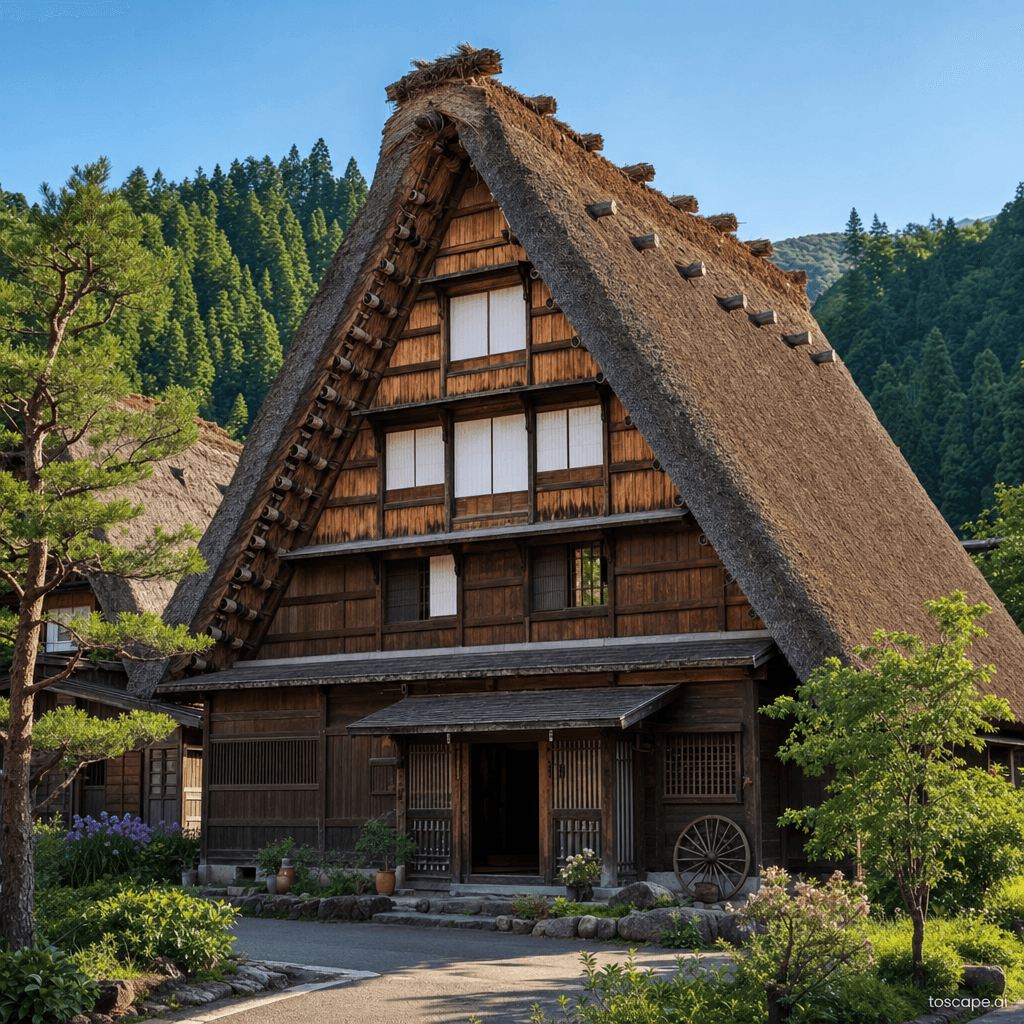
The gasshō facade is the gable end — the most dramatic architectural elevation in Japan: Gable-end composition: The gable end reads as a dark timber A-frame with white plaster infill between the structural members. A single large entrance at the centre of the gable, with smaller windows at attic levels.
Materials & Texture
Monumental steep-pitched thatched roof (45–60°) — the gasshō ("praying hands") profile — one of the steepest domestic roofs in world architecture — kaya (miscanthus grass) thatch — immense roof volume creating a 3–4 storey attic space within the roof — the attic used for sericulture (silkworm cultivation) — heavy timbe...
Color Palette
White, cream, pale sand, warm timber, and shadow-driven dark metal accents define the palette. The facade should stay bright and climate-aware rather than heavy, gray, or over-saturated.
Ornament & Detail
Monumental steep-pitched thatched roof (45–60°) — the gasshō ("praying hands") profile — one of the steepest domestic roofs in world architecture — kaya (miscanthus grass) thatch — immense roof volume creating a 3–4 storey attic space within the roof — the attic used for sericulture (silkworm cultivation) — heavy timbe...
Climate Response
The gasshō-zukuri (praying-hands construction) farmhouses of Shirakawa-go and Gokayama, Gifu/Toyama Prefectures — Japan's most iconic vernacular rural architecture, a UNESCO World Heritage site (inscribed 1995) representing a unique adaptation to extreme snow conditions and sericulture
Landscape & Ground
The gasshō-zukuri (praying-hands construction) farmhouses of Shirakawa-go and Gokayama, Gifu/Toyama Prefectures — Japan's most iconic vernacular rural architecture, a UNESCO World Heritage site (inscribed 1995) representing a unique adaptation to extreme snow conditions and sericulture
Reference elevation
Shirakawa-Go Gasshō-Zukuri Farmhouse — characteristic facade composition, gasshō-zukuri (praying-hands construction) farmhouses of Shirakawa-go and Gokaya....
Context Snapshot
The gasshō-zukuri (praying-hands construction) farmhouses of Shirakawa-go and Gokayama, Gifu/Toyama Prefectures — Japan's most iconic vernacular rural architecture, a UNESCO World Heritage site (inscr...
Contemporary Relevance
Shirakawa-Go Gasshō-Zukuri Farmhouse is useful today for residential, hospitality, civic, and place-branding work that needs Japan-specific character grounded in local massing, material tone, climate response, and settlement logic rather than generic international styling.
Use this style in Toscape
Explore Shirakawa-Go Gasshō-Zukuri Farmhouse directly inside Toscape using the Facade Re-Style and Design Options workflows.
Open Shirakawa-Go Gasshō-Zukuri Farmhouse in the gallery