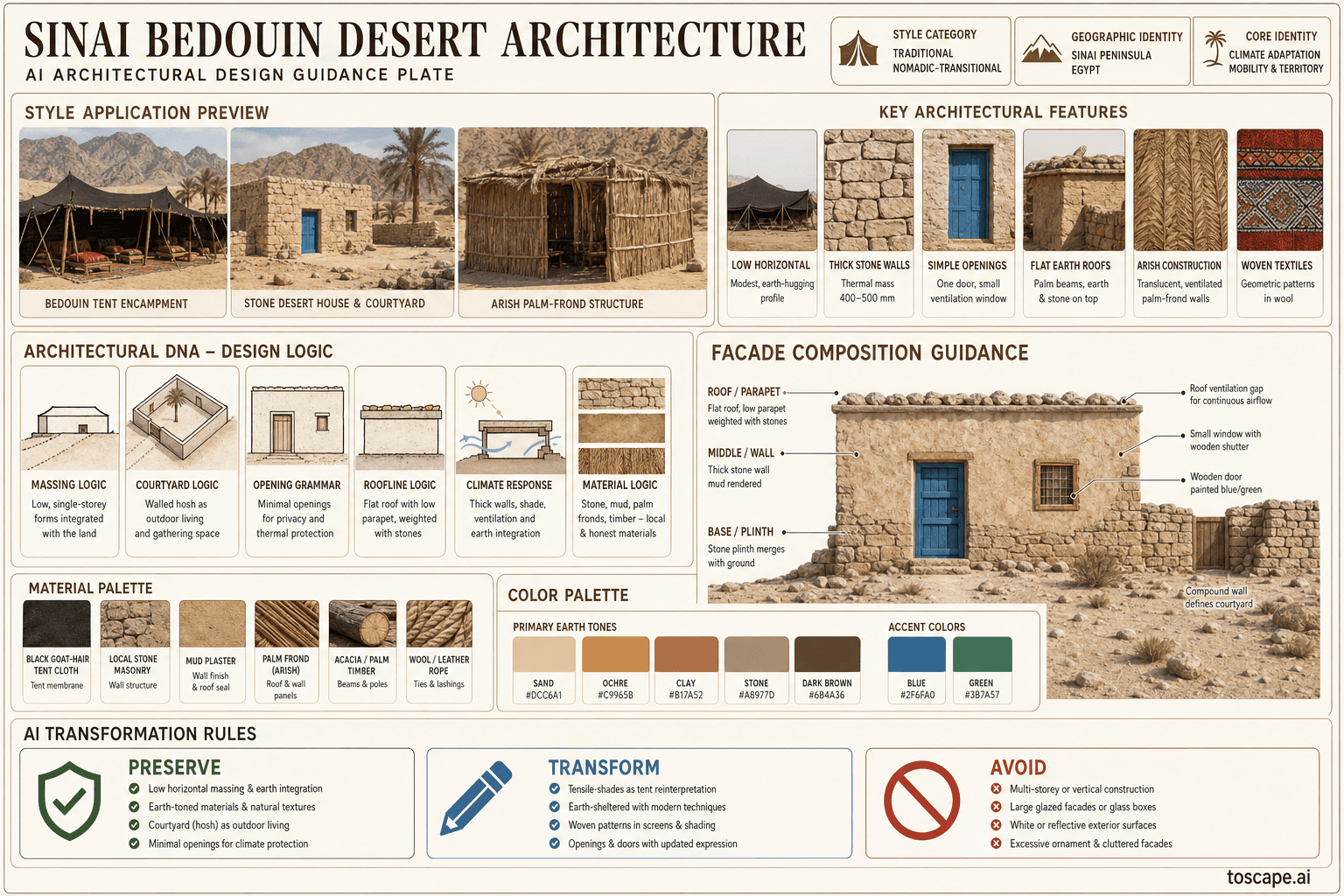
Sinai Bedouin Desert
Egypt · Bedouin architecture of the Sinai Peninsula
The nomadic-transitional architecture of the Sinai Peninsula — Bedouin tent traditions, stone desert shelters, and the architectural response to extreme aridity between the Gulf of...
Overview
Sinai Bedouin Desert is a regional architectural identity in Egypt. Traditional Bedouin architecture of the Sinai Peninsula — a transitional zone between Africa and Asia, defined by the architectural traditions of the Bedouin tribes (Tarabin, Muzeina, Jebeliya, and others), ranging from portable goat-hair tent dwellings (bayt al-sha'r) to increasingly permanent stone houses, reflecting a spectrum from nomadic pastoralism to oasis settlement. The Bedouin black goat-hair tent (bayt al...
Visual DNA
Massing & Form
Bedouin architecture in Sinai exists on a spectrum from temporary to permanent: Bayt al-sha'r (tent): The traditional Bedouin tent is a low, horizontal rectangular volume — typically 3–5 m wide × 6–15 m long × 1.8–2.5 m high. The tent is divided into two sections by a woven curtain (gata): the men's section (al-majlis...
Facade Language
The Bedouin built facade is characterized by extreme simplicity and climate-driven austerity: Tent facade: The tent presents a dark, low, horizontal mass against the desert landscape. The front (men's section) is open during the day — the tent wall is raised or partially opened to create a shaded awning for receiving g...
Materials & Texture
Black goat-hair cloth — the primary tent material, woven by Bedouin women, dark brown-black in color Stone — local desert stone (limestone in northern Sinai, granite in southern Sinai mountains) — dry-stone or mud-mortared Mud plaster — for wall rendering and roof sealing, mixed with straw Palm fronds (arish) — for roo...
Color Palette
White, cream, pale sand, warm timber, and shadow-driven dark metal accents define the palette. The facade should stay bright and climate-aware rather than heavy, gray, or over-saturated.
Ornament & Detail
Bedouin architecture is ornamented through textile and woven expression rather than applied decoration: (1) Woven tent dividers (gata) — the curtain separating men's and women's sections often features geometric patterns in colored wool, (2) woven tent bands — horizontal woven strips with simple geometric patterns alon...
Climate Response
The Bedouin architectural system is an extreme climate adaptation: (1) Mobility — the tent is the primary architectural response to nomadic pastoralism, allowing the tribe to follow seasonal grazing and water sources. (2) Thermal regulation — the black tent creates shade while the open weave allows breeze penetration.
Landscape & Ground
Traditional Bedouin architecture of the Sinai Peninsula — a transitional zone between Africa and Asia, defined by the architectural traditions of the Bedouin tribes (Tarabin, Muzeina, Jebeliya, and others), ranging from portable goat-hair tent dwellings (bayt al-sha'r) to increasingly permanent stone houses, reflecting...
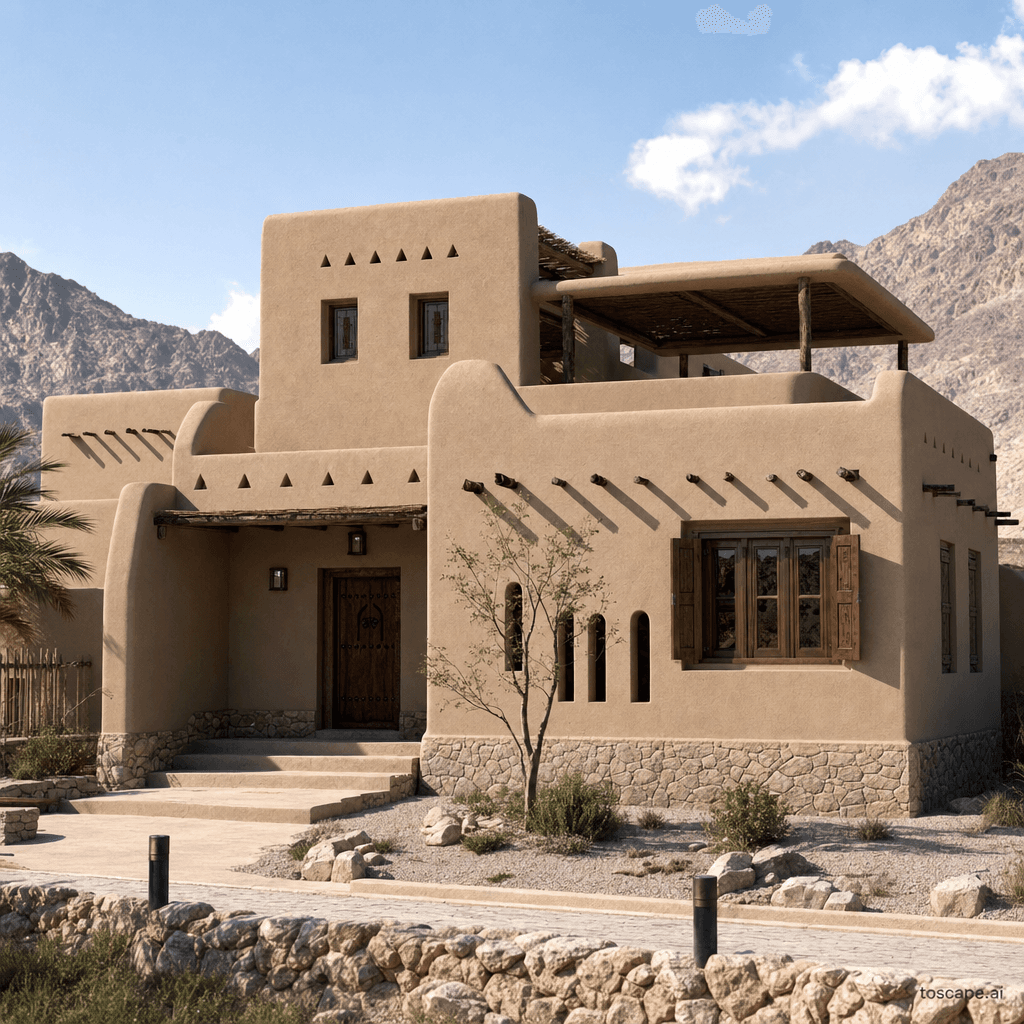
Reference elevation
Sinai Bedouin Desert — characteristic facade composition, Bedouin architecture of the Sinai Peninsula.
Context Snapshot
Traditional Bedouin architecture of the Sinai Peninsula — a transitional zone between Africa and Asia, defined by the architectural traditions of the Bedouin tribes (Tarabin, Muzeina, Jebeliya, and ot... The Bedouin architectural system is an extreme climate adaptation: (1) Mobility — the tent is the primary architectural response to nomadic pastoralism, allowing the tribe to follow seasonal grazing and water sources.
Contemporary Relevance
Sinai Bedouin Desert is useful today for residential, hospitality, civic, and place-branding work that needs Egypt-specific character grounded in local massing, material tone, climate response, and settlement logic rather than generic international styling.
Use this style in Toscape
Explore Sinai Bedouin Desert directly inside Toscape using the Facade Re-Style and Design Options workflows.
Open Sinai Bedouin Desert in the gallery