Tibetan Plateau
China · Tibetan Buddhist
Fortified Dzong Monasteries, Whitewashed Stone Houses & High-Altitude Buddhist Architecture
Overview
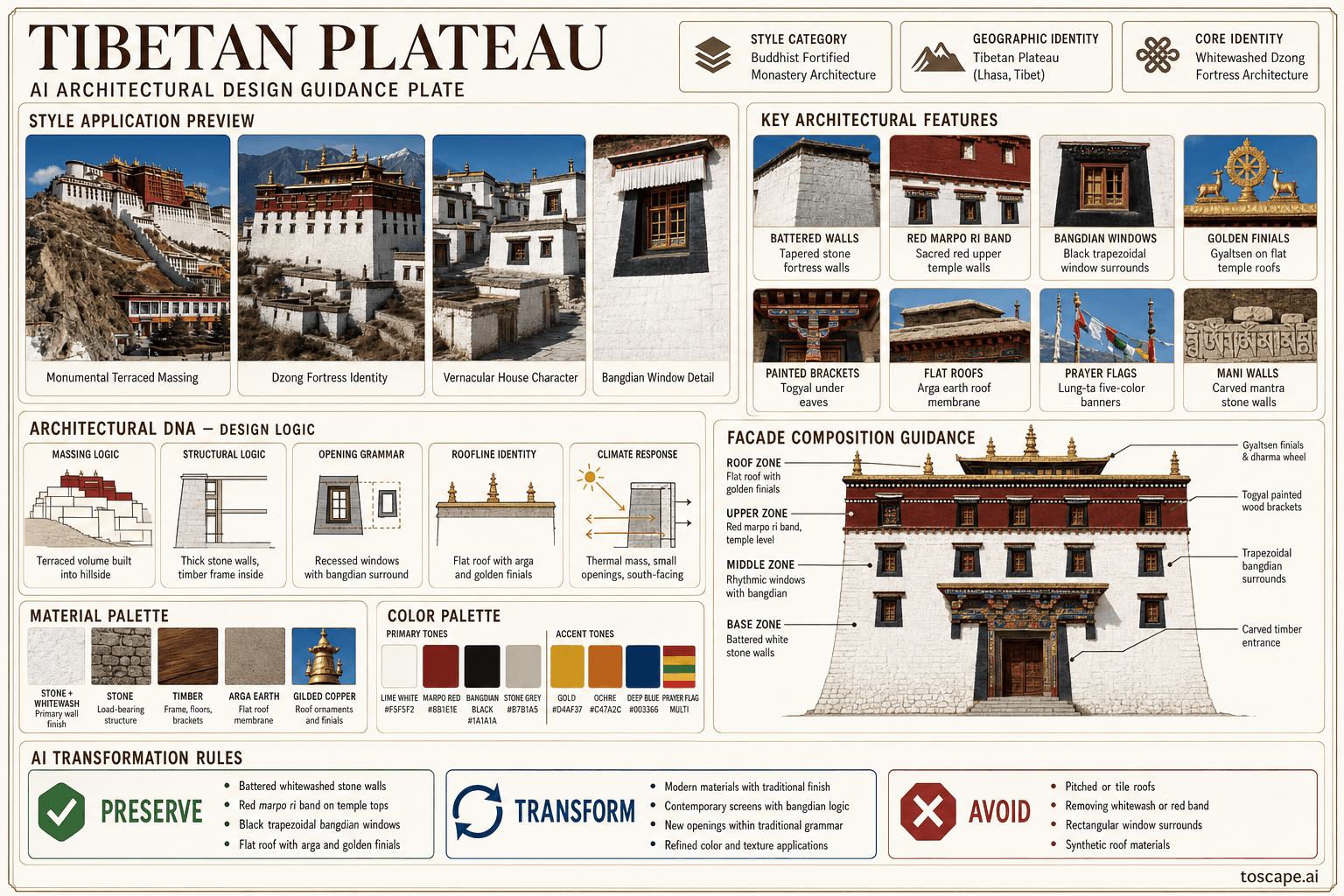
Tibetan Plateau is a regional architectural identity in China. Tibetan Buddhist architecture — the Potala Palace, dzong fortress-monasteries, and Lhasa vernacular. Monumental whitewashed stone dzong (fortress-monasteries) with battered walls and flat roofs, red-band (marpo ri) upper stories on religious buildings, black yak-hair fringed windows, timber frame with painted brackets, mani stone walls and golden roof finials
Visual DNA
Massing & Form
Monumental terraced massing: buildings cascade down hillsides, flat roofs forming stepped terraces. Potala Palace: 13 stories, 117m height, built into Marpo Ri (Red Hill) — architecture as extension of geology.
Facade Language
Monumental: massive whitewashed stone walls with rhythmic rectangular windows, dark trapezoidal window surrounds (bangdian). Potala: white palace (karpo podrang) and red palace (marpo podrang) — contrasting chromatic bands.
Materials & Texture
Stone (granite, limestone — local) — primary wall material. Whitewash (lime) — exterior finish, sacred white.
Color Palette
White, cream, pale sand, warm timber, and shadow-driven dark metal accents define the palette. The facade should stay bright and climate-aware rather than heavy, gray, or over-saturated.
Ornament & Detail
Painted timber brackets (togyal): polychrome — Buddhist motifs, lotus, dragons, geometric. Window surrounds (bangdian): black trapezoidal paint creating facade rhythm — form from yak-hair curtain.
Climate Response
High-altitude plateau (3500-4500m): extreme diurnal range, intense solar radiation, strong winds, minimal precipitation. Flat roofs: snow swept by wind, no rain-shedding need.
Landscape & Ground
Tibetan Buddhist architecture — the Potala Palace, dzong fortress-monasteries, and Lhasa vernacular. High-altitude plateau (3500-4500m): extreme diurnal range, intense solar radiation, strong winds, minimal precipitation.
Reference elevation
Tibetan Plateau — characteristic facade composition, Tibetan Buddhist.
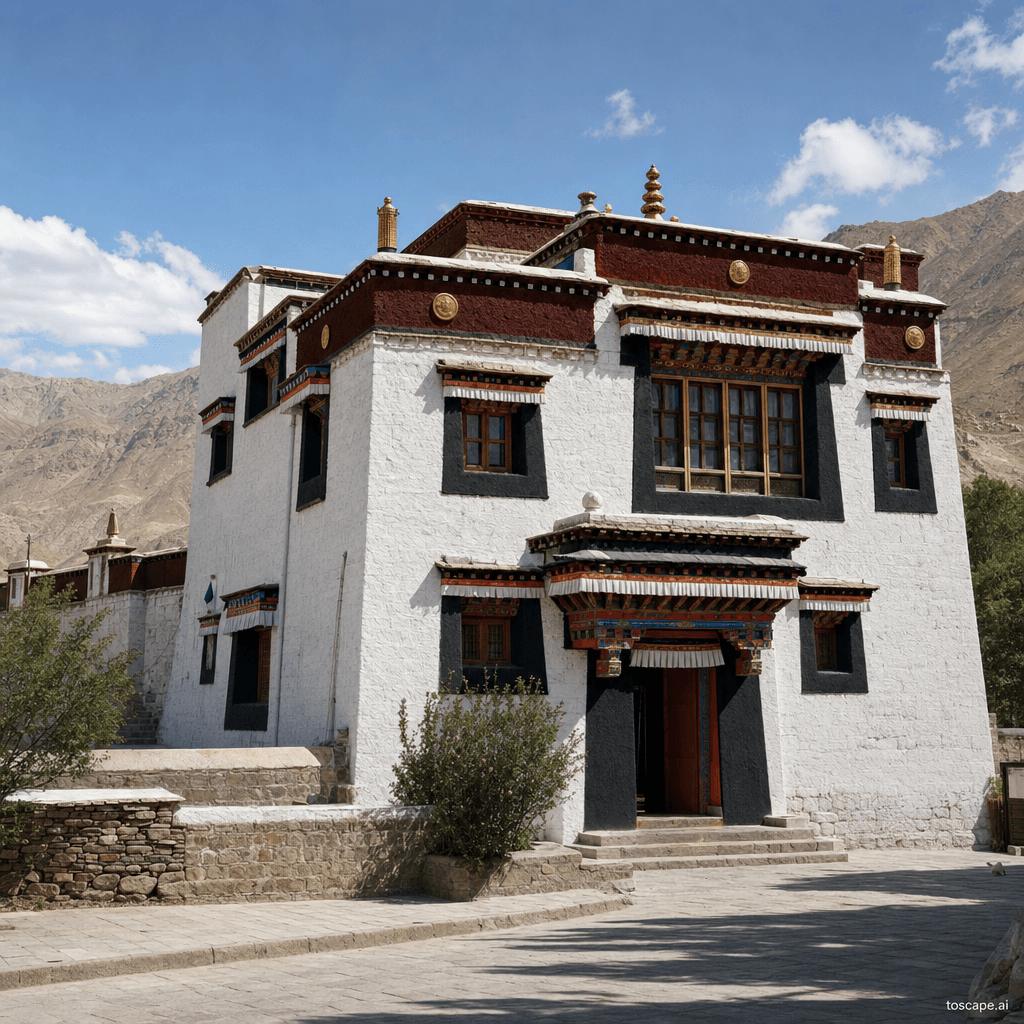
Context Snapshot
Tibetan Buddhist architecture — the Potala Palace, dzong fortress-monasteries, and Lhasa vernacular High-altitude plateau (3500-4500m): extreme diurnal range, intense solar radiation, strong winds, minimal precipitation.
Contemporary Relevance
Tibetan Plateau is useful today for residential, hospitality, civic, and place-branding work that needs China-specific character grounded in local massing, material tone, climate response, and settlement logic rather than generic international styling.
Use this style in Toscape
Explore Tibetan Plateau directly inside Toscape using the Facade Re-Style and Design Options workflows.
Open Tibetan Plateau in the gallery